Blogs

NVIDIA GTC 2025 Conference: Everything You Need to Know
April 18, 2025
Earth Day 2025: Embracing Sustainability Through Greener Data Centers and Web Hosting
April 22, 2025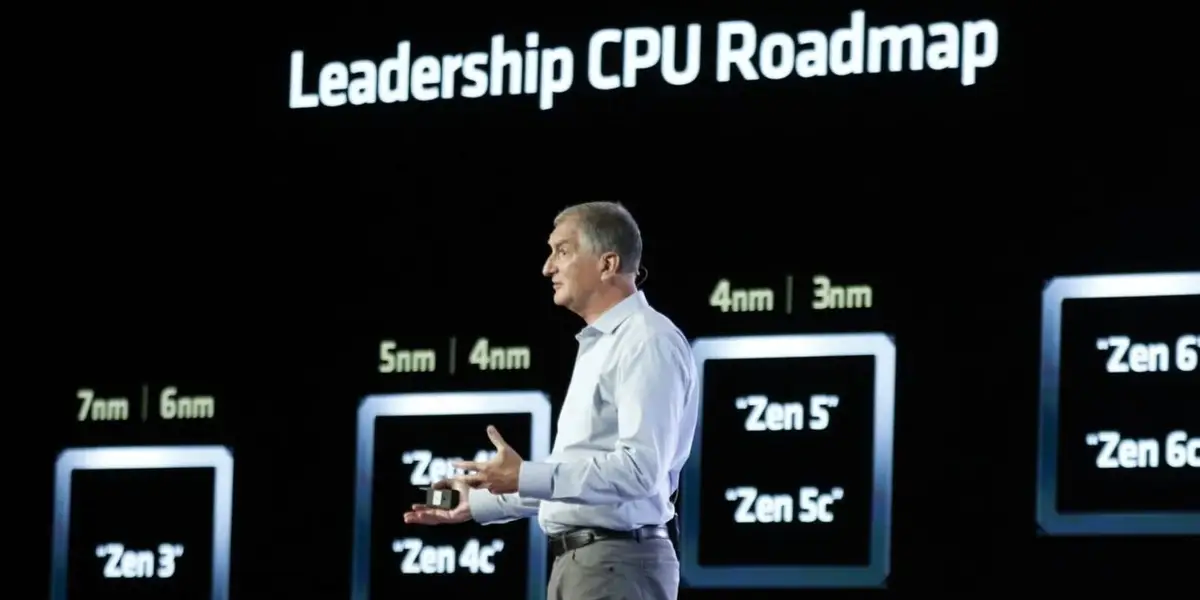
In a recent statement, AMD’s Chief Technology Officer (CTO), Mark Papermaster, has highlighted the growing importance of AI inference in mobile phones and laptops, positioning it as the future of computing. Papermaster’s vision highlights a shift in the technology landscape, where AI-powered capabilities are no longer confined to data centers but are increasingly being integrated into consumer devices, such as smartphones and laptops.
The Shift Toward Edge Computing
Papermaster’s remarks, made during AMD’s latest event, emphasize the shift from AI training the process of teaching models, to AI inference, where pre-trained models are applied to real-time data to make decisions and predictions. Unlike training, which requires immense computational resources often housed in large data centers, inference is a more lightweight, real-time process that is ideal for edge devices such as mobile phones, laptops, and other portable devices.
According to Papermaster, the power of AI inference on mobile and laptops lies in the ability to process AI workloads directly on the device without the need to rely on cloud-based servers. This offers significant advantages in terms of privacy, speed, and efficiency, as users can perform tasks like voice recognition, audio to text transcription, real-time image processing, and even video enhancement without sending data to the cloud. Such advancements are being fueled by improvements in chip architecture and AI acceleration technologies, which are now becoming more accessible to consumer-grade devices.
AI on Mobile Phones: The Future is Now
The mobile phone sector, in particular, stands to benefit immensely from this shift toward AI inference. Devices like smartphones are increasingly adopting specialized AI processors, such as Apple’s Neural Engine and Qualcomm’s Hexagon DSP, to enhance user experience. AMD is betting on this trend and believes that future mobile phones will rely heavily on inference to power features such as augmented reality (AR), personalized assistants, and adaptive camera systems.
Papermaster also noted that AI inference will play a central role in enabling devices to make smarter, autonomous decisions. For instance, AI can optimize battery usage based on patterns, improve system responsiveness through predictive algorithms, and enhance gaming experiences by providing real-time adjustments to graphics and performance. These capabilities are already beginning to surface, with companies like Apple and Google introducing AI-driven features on their smartphones, such as real-time translation, live captions, and advanced photography tools.
The Laptop Market: AI as a Productivity Enhancer
Laptops, another key focus area for AMD, are also expected to integrate more AI-driven features, thanks to the increasing power and efficiency of modern processors. With the advent of powerful processors like AMD’s Ryzen and the integration of AI inference capabilities, laptops are becoming highly capable tools for creative professionals, gamers, and casual users alike.
Also Read: AMD and OpenAI forge strategic partnership
Papermaster highlighted the potential for AI to boost productivity in the laptop space, particularly in areas such as video editing, content creation, and professional workloads. For instance, AI-driven software can help with tasks like automatic video editing, intelligent design recommendations, or voice-to-text transcription. These capabilities are particularly useful for individuals who require high-performance systems for work but want the added benefit of AI enhancements without needing a dedicated AI processor or cloud access.
The Road Ahead: Challenges and Opportunities
While the potential for AI inference on mobile and laptops is vast, there are still several challenges that need to be addressed. One of the primary hurdles is ensuring that devices can run AI workloads efficiently without consuming excessive power or generating too much heat. This requires advancements in chip design, particularly in creating low-power, high-performance processors.
Additionally, there are questions surrounding software compatibility and optimization. For AI inference to reach its full potential on these devices, software needs to be optimized for the hardware capabilities of mobile phones and laptops, which can vary widely. AMD, along with other chip manufacturers, is focusing on providing developers with the tools and frameworks needed to maximize the efficiency of AI on edge devices.
Conclusion
In summary, AMD’s CTO, Mark Papermaster, envisions a future where mobile phones and laptops become the frontlines of AI inference. With advancements in chip design and AI technologies, these consumer devices will not only enhance user experience but also drive new forms of innovation in industries ranging from gaming to professional content creation. As AI continues to evolve, it is clear that edge devices, powered by AI inference, will play an increasingly vital role in the future of computing.

Featured Post

Snowflake and OpenAI Seal $200M Strategic Alliance to Transform AI For Enterprise Data Platforms
Snowflake, the AI Data Cloud leader, and OpenAI this week announced a multi-year, $200 million strategic partnership that will bring advanced artificial intelligence models directly into […]

saad ullah
March 4, 2026

Cisco Live EMEA 2026: Powering the AI Era with Smarter Networks, Security, Collaboration and Agentic Intelligence
At Cisco Live EMEA 2026 in Amsterdam, Cisco unveiled a sweeping portfolio of innovations designed to transform enterprise infrastructure, secure AI-driven environments, and redefine workplace collaboration […]

Sarmad Hasan
February 25, 2026
Microsoft Unveils Maia 200 AI Chip to Take On AWS, Google and Nvidia in Cloud AI Race
Microsoft Unveils Maia 200 AI Chip to Take On AWS, Google and Nvidia in Cloud AI Race. Microsoft has officially launched its next-generation AI accelerator chip, […]
Sarmad Hasan
February 23, 2026