Blogs

Supercomputing 2025 Elevates the AI-HPC Convergence with Performance-Driven Infrastructure
December 1, 2025
AWS re:Invent 2025: 10 Biggest Announcements
December 5, 2025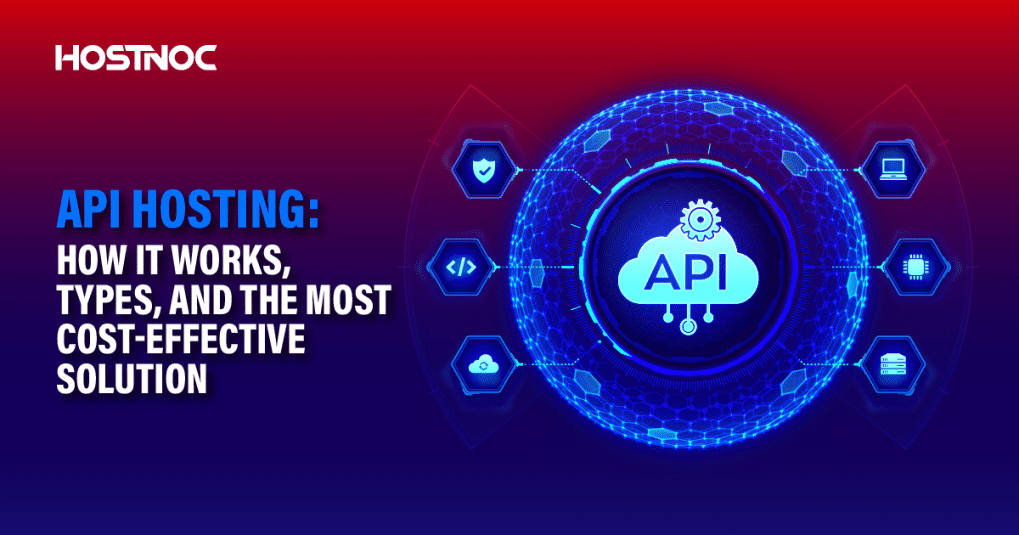
API hosting refers to the process of deploying and making an Application Programming Interface (API) accessible over a network — usually the internet — so that other applications, systems, or services can interact with it. Hosting an API involves setting up the necessary infrastructure, runtime environment, and network configuration to receive requests, process them, and send back responses reliably and securely.
Whether you’re running a startup prototype or a large-scale enterprise application, choosing the right API hosting strategy can significantly impact your performance, cost, and scalability.
How API Hosting Works?
When you host an API, you’re essentially deploying code (often written in languages like JavaScript, Python, Go, or Java) to a server that listens for incoming HTTP or HTTPS requests. Here’s how it typically works:
- API Deployment
Your API code is uploaded or deployed to a hosting environment — a cloud server, virtual machine, or platform. - Endpoint Configuration
The API exposes one or more endpoints (e.g., https://api.example.com/users) where it listens for requests. - Request Handling
Clients (like mobile apps or web apps) send requests to these endpoints. The server routes the request to the correct logic or function. - Processing and Integration
The API may query a database, interact with third-party services, or perform internal computations. - Response Delivery
The API sends back structured data — typically in JSON or XML — to the client application.
To ensure smooth operation, the hosting environment also manages scalability, security, and monitoring — crucial for APIs serving large or global user bases.
Types of API Hosting
Here are five common types of API hosting
1. Cloud Hosting
Cloud hosting is the most common and versatile option for modern API deployment. It uses infrastructure from providers like Amazon Web Services (AWS), Google Cloud Platform (GCP), and Microsoft Azure.
Pros:
- Highly scalable and globally distributed
- Built-in load balancing, monitoring, and security features
- Integrates easily with other cloud services (databases, storage, etc.)
Cons:
- Costs can increase with heavy traffic
- Less granular control over infrastructure
Examples:
- AWS API Gateway + Lambda (Serverless APIs)
- Google Cloud Run or Google Cloud Functions
- Azure API Management
- Vercel and DigitalOcean App Platform for modern web APIs
2. Serverless Hosting (Function-as-a-Service – FaaS)
Serverless platforms automatically manage infrastructure and scale your code based on demand. You only pay for execution time.
How it works:
You deploy individual functions (e.g., getUserData()) instead of entire servers. The platform spins up instances as requests come in and scales down when idle.
Pros:
- Cost-effective for low to moderate workloads
- Automatic scaling and zero maintenance
- Fast time-to-market
Cons:
- Cold start latency can affect performance
- Execution time and memory may be limited
Examples:
- AWS Lambda + API Gateway
- Google Cloud Functions
- Vercel Functions for Next.js APIs
- Netlify Functions
3. Platform-as-a-Service (PaaS)
PaaS solutions abstract away infrastructure management, allowing developers to focus purely on application code.
Pros:
- Simple deployment and management
- Built-in support for continuous deployment (CD)
- Good balance between flexibility and automation
Cons:
- Limited control over underlying servers
- May be costlier than raw cloud infrastructure for high traffic
Examples:
- Heroku
- Render
- Fly.io
- DigitalOcean App Platform
4. API-as-a-Service (APIaaS)
In this model, the provider manages the entire lifecycle of your API — including deployment, authentication, analytics, and even monetization.
Pros:
- Fully managed with no need for server setup
- Built-in analytics, security, and documentation
- Ideal for rapid prototyping and public APIs
Cons:
- Limited customization options
- Can be expensive for high-volume usage
Examples:
- RapidAPI
- Zuplo
- Kong Konnect
5. Self-Hosted / On-Premises Hosting
This approach gives you full control by running your API on your own physical servers or Virtual Private Servers (VPS).
Pros:
- Full control over performance, configuration, and data privacy
- Potentially cost-effective for stable, predictable workloads
Cons:
- Requires deep technical expertise for setup and maintenance
- Scaling can be complex and manual
Examples:
- VPS providers like DigitalOcean HostNoc, OVHcloud or Linode
- On-premises servers in corporate data centers
Simplest and Most Cost-Effective Ways to Host an API
For developers and small projects, simplicity and cost are key. Here are some of the easiest and most affordable methods:
- Vercel or Netlify (Serverless + Managed Deployment)
Ideal for APIs built with Next.js or simple serverless functions.- Free tiers available
- Zero-configuration deployment via Git integration
- Render or Railway (PaaS Solutions)
Excellent for hosting Node.js, Python (Flask/FastAPI), or Go APIs.- Simple “push-to-deploy” workflows
- Free starter tiers and built-in monitoring
- AWS Lambda with API Gateway (Serverless)
- Pay only for execution time
- Scales automatically with demand
- Integrates seamlessly with databases like DynamoDB or RDS
- DigitalOcean App Platform or Droplets (Hybrid)
- Straightforward setup for containerized APIs
- Predictable, low-cost pricing
Key Factors When Choosing an API Hosting Solution
Here is a table that highlights some of the key factors you should consider when choosing API hosting.
| Factor | Why It Matters | Best Options |
| Scalability | Handles traffic spikes efficiently | Cloud, Serverless |
| Cost | Impacts long-term sustainability | Serverless, PaaS |
| Performance | Ensures low latency and fast response | Cloud, Edge-based PaaS |
| Control | Customization and compliance | Self-hosted, VPS |
| Security | Protects data and access | Cloud providers, API gateways |
| Ease of Management | Saves time on setup/maintenance | PaaS, APIaaS |
Conclusion
API hosting is a foundational part of modern software development — enabling apps, devices, and services to communicate seamlessly.
For most developers, serverless hosting (like AWS Lambda or Vercel Functions) and PaaS platforms (like Render or Heroku) strike the best balance between simplicity, cost, and scalability.
For enterprises or security-sensitive organizations, cloud-based or self-hosted infrastructure may be more appropriate due to greater control and compliance requirements.
Ultimately, the best API hosting solution depends on your use case, budget, and technical expertise — but today’s ecosystem offers flexible options for every scenario.
Did this guide on API hosting help you? Share your thoughts with us in the comments section below.

Featured Post

Web Hosting Statistics 2026: Market Growth, Trends and Key Insights
In 2026, businesses face a digital landscape that’s faster, more competitive, and more infrastructure-dependent than ever. Yet many decision-makers still rely on outdated web hosting data, […]

Sarmad Hasan
February 16, 2026
What Is Localhost? Complete Guide to Master It (2026)
Table of Contents What Is Localhost? Local Hosting Definition How Localhost Works? Where is the Localhost File? Common Localhost Ports and Their Uses What Is the […]

saad ullah
January 23, 2026
Top 10 Web Hosting Control Panels for 2026
In 2026, managing a web hosting environment has become more efficient and user-friendly, thanks to the evolving landscape of control panels. Whether you are running a […]
Sarmad Hasan
November 10, 2025