Blogs

Top 10 Cloud Trends You Can’t Afford to Ignore in 2026
September 23, 2025
Dedicated Server for Telecommunication: Everything You Need to Know
September 29, 2025
on
7 Cybersecurity Trends That Will Dominate in 2026

As we approach 2026, the digital landscape continues to evolve at an unprecedented pace, bringing both innovation and new threats. Cybersecurity has become a cornerstone of resilience for businesses, governments, and individuals alike, as attackers grow more sophisticated and exploit emerging technologies. From ransomware-as-a-service to AI-powered phishing campaigns, cyber threats are no longer isolated incidents; they are persistent, global challenges that demand proactive defense strategies.
The rapid advancement of technologies such as artificial intelligence, quantum computing, and the Internet of Things (IoT) is reshaping not just how we live and work but also how we must think about security. With hybrid work environments becoming the norm and data moving more freely across decentralized systems, traditional perimeter-based security models are no longer sufficient.
All these developments are creating new cybersecurity trends. Organizations are now looking toward adaptive, intelligent, and automated security solutions that can keep up with the speed and complexity of modern cyber threats.
In this article, HOSTNOC will explore seven key cybersecurity trends that are set to dominate in 2026.
As we approach 2026, the digital landscape continues to evolve at an unprecedented pace, bringing both innovation and new threats. Cybersecurity has become a cornerstone of resilience for businesses, governments, and individuals alike, as attackers grow more sophisticated and exploit emerging technologies. From ransomware-as-a-service to AI-powered phishing campaigns, cyber threats are no longer isolated incidents; they are persistent, global challenges that demand proactive defense strategies.
The rapid advancement of technologies such as artificial intelligence, quantum computing, and the Internet of Things (IoT) is reshaping not just how we live and work but also how we must think about security. With hybrid work environments becoming the norm and data moving more freely across decentralized systems, traditional perimeter-based security models are no longer sufficient.
All these developments are creating new cybersecurity trends. Organizations are now looking toward adaptive, intelligent, and automated security solutions that can keep up with the speed and complexity of modern cyber threats.
In this article, HOSTNOC will explore seven key cybersecurity trends that are set to dominate in 2026.
Seven Cybersecurity Trends that will Dominate in 2026:
1. AI-Powered Attacks and Defense Become Standard
2025 marked the escalation of AI usage by both attackers (for deepfakes, social engineering, and malware) and defenders (for detection, response, and automation). Artificial intelligence will serve as both sword and shield. Defensive tools using generative AI, AI‑driven security operation center playbooks, and real-time threat modeling will be ubiquitous. Attackers will mirror that, refining deepfake-based CEO impersonation scams, already $200 million lost in Q1 2024 in the U.S. alone.
Expert Voices:
“The era of AI hacking has arrived; both malicious actors and defenders are leveraging AI tools.”
2. Zero Trust and Identity‑First Security Become Dominant Architectures
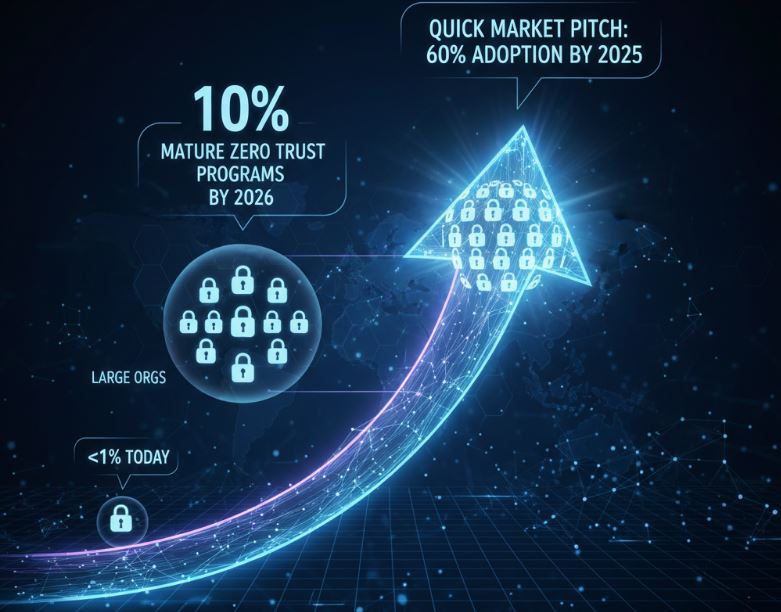
Traditional perimeters are gone. Zero Trust is more than a buzzword; it is a necessity. Gartner predicts that 10% of large organizations will have mature Zero Trust programs by 2026, up sharply from <1% today. Quick Market Pitch projects 60% adoption by 2025. Expect identity‑first designs, managing user and machine identities equally, micro-segmentation across apps and data, and continuous risk evaluation, into default architectures.
3. AI‑Driven CTEM (Continuous Threat Exposure Management)
The modern expansion of digital assets demands continuous, not periodic, threat management. Gartner flagged continuous threat exposure management as a top trend. Automated exposure platforms will detect misconfigurations, emerging vulnerabilities, and anomalous behaviors proactively. Organizations embracing continuous threat exposure management will be significantly less likely to suffer breaches. Considering Cisco pricing can help organizations choose the right security solutions without overspending.
4. Quantum‑Safe Cryptography on the Rise
The “harvest now, decrypt later” threat, where attackers collect encrypted data now to decrypt after quantum advances, is no longer theoretical. NIST’s post-quantum standards are in place. Leading firms will implement quantum-resistant encryption (e.g., CRYSTAL-Kyber, Dilithium) and adopt cryptographic agility to pivot quickly.
5. OT‑IT Convergence: Securing Operational Technology
Operational Technology systems (like power grids, manufacturing controls) are increasingly connected, making them cyber-risk candidates. Ransomware incidents doubled from 32% in 2023 to 56% in 2024. Expect tightly integrated defense strategies, digital twins, anomaly monitoring, AI detection, earlier reserved for IT domains, now adapted to OT contexts with specialized controls.
6. Regulation, Cyber Insurance, and Governance Intensify
A regulatory uptick is underway. The EU’s NIS2, DORA (from Jan 2025), and Cyber Resilience Act (CRA) enforce reporting, vulnerability handling, and product security standards. Cyber insurance is adjusting, too. According to the data, 50% of policies now mandate Identity and Access Management controls. Given these changes, the importance of Cybersecurity is becoming central to how organizations structure risk and compliance strategies.
Boards will feature cybersecurity expertise (projected 70% by 2026. Executive liability, fast-reporting mandates, and insurer-driven security refinements will elevate governance and incident response maturity.
7. Supply Chain, Cloud, and IoT Attack Surfaces Grow
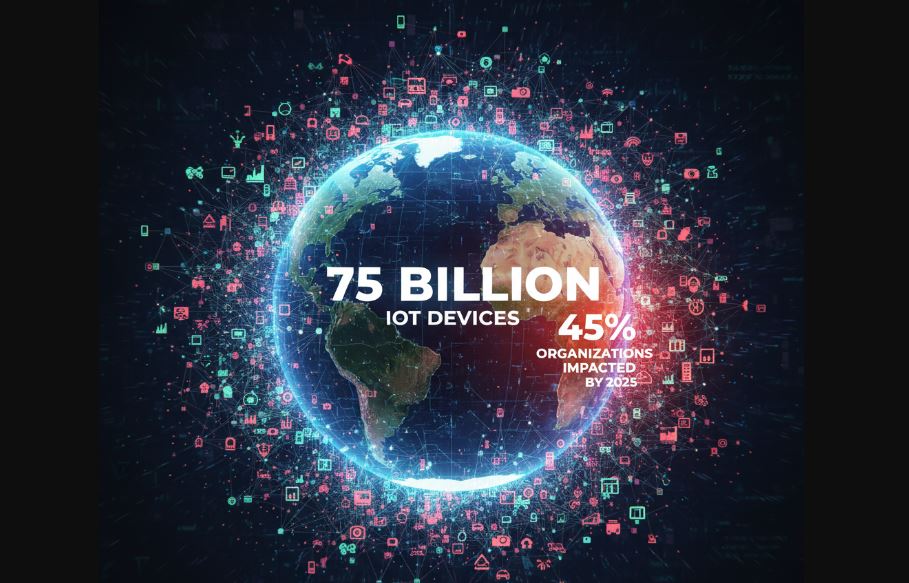
Supply chain breaches have made their way onto many cybersecurity trends for a couple of years, and this year is no different. According to the statistics, 45% of organizations will be impacted by 2025. IoT devices will balloon to unprecedented levels, 75 billion by 2025. Cloud misconfigurations remain a leading cause of breaches. Expect mandatory software bill of materials, continuous supplier monitoring, robust endpoint protection for Internet of Things, and integrated cloud posture management as standard.
Why Do These Cybersecurity Trends Matter?
Here are some of the reasons why these cybersecurity trends matter.
- Speed and scale: AI accelerates all cyber operations for both attackers and defenders.
- Beyond the firewall: Identity and exposure now matter more than network location.
- Future‑proving security: Quantum threats require preemptive adaptation.
- Real‑world consequences: Operation Technology attacks risk physical safety; supply chain and IoT expand the threat vector.
- Regulation is no longer optional: Boards and executives must deeply engage or face liability.
Conclusion
These cybersecurity trends reflect the shifting threat landscape, the growing influence of regulations, and the increasing role of emerging technologies in both offensive and defensive cyber operations. Understanding these developments will be essential for security professionals, executives, and policymakers striving to stay ahead in an era of digital disruption.
2026 will be defined by automation, proactive defense, and the convergence of networks, systems, and regulation. The cybersecurity field will evolve from reactive protection to adaptive resilience. Which of these cybersecurity trends will create the biggest splash in 2026? Share it with us in the comments section below.

Featured Post
7 Key Takeaways from the IBM X-Force 2026 Threat Intelligence Index
The IBM X-Force Threat Intelligence Index 2026 paints a stark picture of the modern cyber threat landscape, one where artificial intelligence (AI) accelerates the pace of […]

Sarmad Hasan
March 13, 2026
SSL Certificate Chain: A Comprehensive Guide
In the modern era of the internet, security is of utmost importance, especially when sensitive data such as passwords, credit card numbers, and personal information is […]
Sarmad Hasan
February 6, 2026

Black Hat 2025: 10 Cool New Cybersecurity Products Announced At The Conference
Black Hat 2025 conference took place from August 2–7 2025 in Las Vegas, saw a wave of next‑gen security tools focused on AI, agentic systems, data […]
Sarmad Hasan
August 8, 2025