Blogs
Top 10 IT Challenges for 2026 and How To Overcome Them
December 12, 2025
Top 10 IT Priorities for 2026
December 17, 2025
on
Dedicated Server for App Development: All You Need To Know
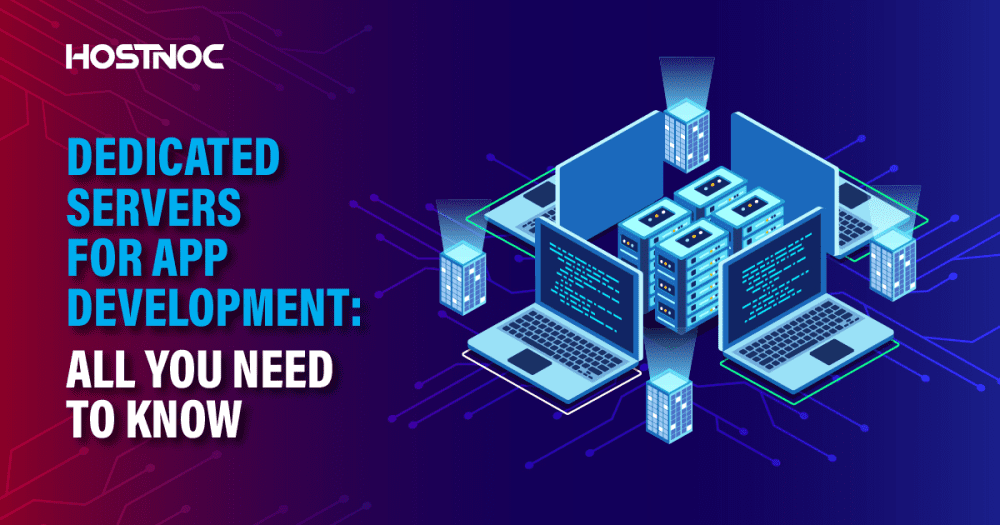
Developing, testing, and deploying applications requires a hosting environment that can deliver reliability, performance, and flexibility. Whether you are building a mobile application, web platform or complex artificial intelligence and machine learning solution, the foundation of your infrastructure plays a crucial role in ensuring seamless performance and scalability. Among the various hosting solutions available, dedicated servers stand out as one of the most powerful and customizable options for professional app developers and enterprises.
In this article, HOSTNOC tells you everything you need to know about a dedicated server for app development.
Developing, testing, and deploying applications requires a hosting environment that can deliver reliability, performance, and flexibility. Whether you are building a mobile application, web platform or complex artificial intelligence and machine learning solution, the foundation of your infrastructure plays a crucial role in ensuring seamless performance and scalability. Among the various hosting solutions available, dedicated servers stand out as one of the most powerful and customizable options for professional app developers and enterprises.
In this article, HOSTNOC tells you everything you need to know about a dedicated server for app development.
Table of Contents
Dedicated Server for App Development
Here is everything you need to know about a dedicated server for app development.
1. Why Choose a Dedicated Server for App Development?
Developing and hosting applications demand a stable, secure, and high-performance environment. As applications grow in complexity and user demand increases, shared or virtualized environments often fall short.
Here is why a dedicated server is an optimal solution:
a. Full Control and Customization
Dedicated servers offer developers root-level access, granting total control over the server’s operating system, software stack, and configuration settings. This freedom allows developers to tailor the environment precisely to their project’s needs, whether that means installing specific frameworks, optimizing server performance, or configuring specialized software dependencies.
For example, a development team can:
- Choose between operating systems such as Linux distributions (Ubuntu, CentOS, Debian) or Windows Server.
- Install and configure web servers like Nginx or Apache.
- Deploy specific databases such as MySQLor MongoDB.
- Set up preferred development languages and environments, Python, Node.js, Java, PHP, or Ruby.
This level of customization ensures that the server aligns perfectly with the unique requirements of the application, reducing compatibility issues and improving development efficiency.
b. Enhanced Performance
One of the most significant benefits of a dedicated server is unmatched performance. Because all CPU cores, RAM, and storage are allocated solely to one user, there is no competition for resources. This means applications can handle high traffic volumes, execute complex processes, and maintain low latency, even during peak usage periods.
Performance consistency is critical for:
- E-commerce platforms that experience seasonal traffic surges.
- Mobile applications that process real-time data and user interactions.
- Artificial Intelligence and Machine Learning workloads that require GPU acceleration and high computational power.
- Gaming servers that rely on minimal latency for optimal gameplay.
By removing the bad neighborhood effect common in shared environments, dedicated servers provide predictable performance and faster response times, leading to improved user satisfaction and retention.
c. Improved Security and Data Protection
Security is a paramount concern for any development or production environment. With dedicated servers, you benefit from complete isolation, meaning no other user has access to your hardware. This eliminates risks associated with shared environments, such as data leaks or malware from other users.
Developers can also implement custom security measures, including:
- Advanced firewalls and intrusion detection systems.
- Encrypted data storage and secure communication protocols (SSL/TLS).
- Multi-factor authentication for administrative access.
- Regular vulnerability scans and patch management.
This high level of security is especially vital for applications handling sensitive data such as financial services, healthcare solutions or enterprise systems.
d. Scalability and Flexibility
As applications evolve, their resource requirements often change. Dedicated servers are highly scalable, allowing developers to upgrade hardware components (e.g., add more RAM, CPUs or SSD storage) or migrate to higher-tier configurations without disrupting operations.
For instance, a startup might begin with a mid-range dedicated server for testing and gradually scale up as user traffic and data demands increase. This flexibility ensures that the server grows with your business, providing both short-term cost efficiency and long-term sustainability.
e. High Reliability and Uptime
Dedicated servers are designed to deliver exceptional reliability and uptime. Most reputable hosting providers guarantee uptime levels of 99.9% or higher, backed by robust Service Level Agreements (SLAs). Since you are not sharing infrastructure with others, issues like bandwidth throttling or hardware overloads are virtually eliminated.
In addition, dedicated servers are often supported by redundant power, network connectivity, and cooling systems, ensuring continuous operation even in adverse conditions. This reliability is crucial for production environments where downtime directly impacts revenue and user trust.
2. Dedicated Server for App Development: Common Use Cases
Here are some of the common use cases for a dedicated server for app development.
a. Web and E-commerce Applications
For online businesses, speed and uptime directly affect sales and customer experience. Dedicated servers ensure that websites and e-commerce platforms load quickly, process transactions securely and handle large volumes of concurrent users without performance degradation.
b. Mobile App Development and Hosting
Mobile applications often require backend services for data storage, API management, and user authentication. A dedicated server provides the ideal backend infrastructure for hosting APIs, databases, and middleware securely and efficiently.
c. AI and Machine Learning Workflows
Training AI models and processing large datasets demand significant computational power. Organizations partnering with an AI software development company can leverage GPU-equipped dedicated servers to accelerate model training and deployment.
d. Gaming Servers
Online gaming requires ultra-low latency and real-time responsiveness. Dedicated servers deliver the stability, bandwidth, and processing power necessary to host multiplayer games, reducing lag and ensuring smooth gameplay.
e. Development and Testing Environments
Dedicated servers are perfect for creating isolated development, staging, and testing environments. Developers can safely experiment, deploy new versions, and test features without affecting live production systems.
3. Key Considerations When Choosing a Dedicated Server For App Development
Here are some of the key factors you should consider when choosing a dedicated server for app development.
a. Technical Specifications
Assess your application’s resource needs. Consider:
- CPU: The number of cores and clock speed for processing workloads.
- RAM: Determines how many processes can run simultaneously.
- Storage: Choose between SSDs (faster, ideal for high-performance apps) or HDDs (cheaper, suitable for archival storage).
- Bandwidth: Ensure sufficient data transfer capacity to handle expected traffic.
b. Managed vs. Unmanaged Hosting
- Managed Dedicated Servers: The hosting provider handles system maintenance, updates, and security monitoring, ideal for teams that prefer to focus on development.
- Unmanaged Dedicated Servers: You have full responsibility for server management, offering maximum control but requiring more technical expertise.
c. Support and Monitoring
A reliable provider should offer 24/7 technical support, proactive monitoring, and backup options to minimize downtime and ensure system health.
d. Cost and Budget
While dedicated servers are more expensive than VPS or shared hosting, their performance and reliability justify the investment, especially for mission-critical applications. Evaluate your long-term growth and ROI when choosing a plan.
e. Reliability and Uptime Guarantees
Partner with a hosting provider known for high uptime SLAs, redundant infrastructure, and a proven track record of dependable service.
4. Deployment Best Practices
When setting up a dedicated server for app development, follow these best practices:
- Server Setup: Choose and install your preferred OS, configure networking, and secure SSH access.
- Application Deployment: Use Git, SCP, or CI/CD tools to transfer and manage application files.
- Database Configuration: Set up and optimize your databases for speed and scalability.
- Process Management: Use tools like PM2, systemd, or Docker to manage running processes efficiently.
- Security Configuration: Implement firewalls (e.g., UFW, iptables), secure SSH keys, and perform regular audits.
- Web Server Optimization: Configure Nginx or Apache for load balancing, caching, and compression to enhance performance.
Conclusion
Dedicated servers remain the gold standard for application development and hosting, offering unmatched performance, security, and control. Whether you’re building a small web app or a large-scale enterprise system, the reliability and scalability of a dedicated server ensure that your application runs smoothly, securely, and efficiently.
By investing in dedicated server infrastructure, developers gain the flexibility to innovate freely, the stability to scale confidently, and the performance to deliver exceptional user experiences, all critical components in today’s competitive digital ecosystem.
Would you use a dedicated server for app development? If yes, why? Share it with us in the comments section below.

Featured Post
Dedicated Server with Root Access: Everything You Need to Know
A dedicated server with root access is a physical server exclusively allocated to a single user or organization, providing complete administrative control over the operating system, […]

Sarmad Hasan
March 16, 2026
Dedicated Server For Government: Everything You Need to Know
In an era where digital transformation defines national competitiveness, governments around the world are investing heavily in resilient, secure, and scalable infrastructure. Among all infrastructure choices, […]
Sarmad Hasan
March 11, 2026
Dedicated Server with SSD: High-Performance Hosting for Mission-Critical Workloads
A Dedicated Server with SSD (Solid State Drive) is a premium hosting solution in which an entire physical server is allocated to a single user and […]
Sarmad Hasan
March 6, 2026