Blogs
Top 10 IT Priorities for 2026
December 17, 2025
Dedicated Server for Small Business: A Complete Guide
December 22, 2025
on
HPE AI Networking: Unified Juniper + Aruba Portfolio Takes Shape
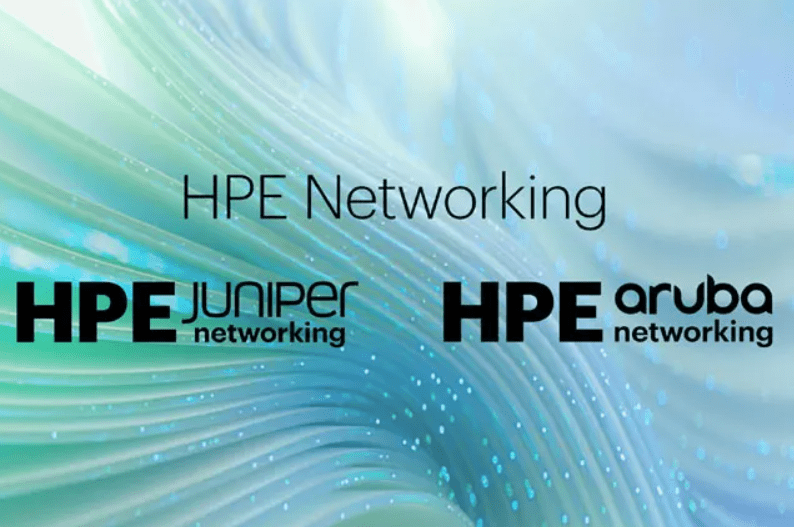
HPE is aggressively reshaping the enterprise networking landscape, combining the best of Juniper and Aruba to deliver an AI-native, unified networking portfolio. The move, unveiled at HPE’s December 2025 announcements, signals the company’s ambition to emerge as a dominant force in the next era of “self-driving” enterprise and data-center networks.
HPE is aggressively reshaping the enterprise networking landscape, combining the best of Juniper and Aruba to deliver an AI-native, unified networking portfolio. The move, unveiled at HPE’s December 2025 announcements, signals the company’s ambition to emerge as a dominant force in the next era of “self-driving” enterprise and data-center networks.
HPE AI Networking: Grand Plan for Cross-Pollination
At the heart of HPE’s strategy is what HPE AI Networking President and General Manager Rami Rahim calls a “grand plan” to cross-pollinate the AI-ops capabilities of Juniper’s Mist platform and Aruba’s networking stack. Rather than simply merging two companies, HPE is extracting what works best on each, leveraging microservices architectures to move capabilities between platforms.
According to Rahim, this approach enables more rapid innovation: build once, deploy twice. Mist, with its public-cloud native AIOps heritage, brings powerful telemetry, user-state data, and automated network management. Aruba contributes strengths in security integration, flexible deployment models (on-premises or virtual private cloud), and agentic AI features for client profiling and organizational insights.
The result: both platforms, Mist and Aruba Central, will gradually support features previously exclusive to the other, giving customers unified access to cutting-edge HPE AI-networking regardless of their deployment choice.
HPE AI Networking Products and Timing
As part of the first wave of combined products following HPE’s acquisition of Juniper Networks for roughly $13.4 billion just five months ago, HPE unveiled:
- A dual-platform Wi-Fi 7 access point — the first hardware to support both Aruba and Juniper Mist control planes. Customers will be free to choose their control point now and switch later without needing new hardware. The Wi-Fi 7 AP is slated for delivery in the third quarter of 2026.
- A compact, power-efficient edge router: the newly launched HPE Juniper Networking MX301, a 1RU multiservice router offering 1.6 Tbps throughput, ideal as an on-ramp for distributed inference clusters and edge AI workloads.
- A high-performance data center switch: the new HPE Juniper Networking QFX5250. Leveraging Broadcom’s Tomahawk 6 silicon, this switch delivers up to 102.4 Tbps and is 100% liquid-cooled, designed specifically to support scale-out AI inference workloads in data centers.
Moreover, starting in the first quarter of 2026, HPE plans to move software, specifically the AI-ops capabilities, between the platforms: Mist’s Large Experience Model (LEM) and its AI assistant (Marvis) will become available within Aruba Central; and Aruba’s AI client-profiling and organizational-insight features will surface in Juniper Mist.
How HPE AI Networking Push Will Disrupt The Market
Behind HPE’s aggressive rollout is a broader recognition that AI workloads demand far more from networks than traditional enterprise applications. Low latency, massive throughput, and flexible deployment, whether cloud-native, on-premises, or hybrid, are becoming essential. HPE’s new switches and routers, combined with AI-native orchestration, aim to meet those requirements.
Additionally, HPE’s strategy challenges legacy networking vendors, notably Cisco Systems. In an interview, HPE AI Networking Vice President of Products and Solutions Jeff Aaron claimed that with Wi-Fi 7 (and even Wi-Fi 8 on the horizon), coupled with the unified Aruba–Mist portfolio, HPE has the potential to become the number-one wireless networking provider, positioning itself as a serious Cisco competitor.
The cross-pollination approach is also designed to protect customer investments. Because both platforms are being unified at the software and microservices level, customers can adopt new capabilities without needing to overhaul hardware or rip-and-replace their existing infrastructure, an appealing value proposition for enterprises wary of lock-in.
Strategic Partnerships with NVIDIA and AMD
HPE is not just unifying networking platforms internally; it is also strengthening external partnerships to support its AI infrastructure ambitions. The newly expanded collaboration with Advanced Micro Devices (AMD) is a key example. As part of the broader AI infrastructure push, HPE is among the first OEMs to adopt AMD’s “Helios” rack-scale AI architecture designed for large-scale AI workloads across cloud, HPC, and AI-native data centers.
Under this collaboration, HPE will integrate purpose-built Juniper Networking switches with Helios, leveraging Broadcom-designed scale-up Ethernet switches and software to deliver high-bandwidth, low-latency connectivity over standard Ethernet. The result is a fully open, scalable AI infrastructure stack suited for modern AI model training and inference.
This dual strategy integrates advanced network infrastructure while aligning with leading compute partners like AMD (and by extension, companies such as NVIDIA, with which HPE has worked previously), making HPE’s AI networking case stronger.
HPE AI Networking: What Comes Next?
HPE says this is just the beginning. As Juniper Mist and Aruba Central continue to converge, the “distinction” between the two platforms will eventually fade, the goal being that customers experience identical functionality regardless of underlying platform, with differences only in deployment model (cloud-based vs. on-premises or private cloud).
For enterprises and service providers, that means a future where choosing between Mist or Aruba is less consequential; they can focus on outcomes (performance, flexibility, AI readiness), not the underlying architecture. For rivals like Cisco, the challenge is clear: compete not just with incremental upgrades, but against a unifying AI-native, vendor-consolidated offering built for the future of networking.
Furthermore, the rise of Wi-Fi 7 (and eventually Wi-Fi 8), combined with powerful edge routers and liquid-cooled high-throughput switches, suggests a future where edge inference, campus AI applications, and cloud-native workloads will rely on networks as a first-class citizen, not merely as plumbing.
Overall, HPE’s announcement marks a pivotal moment: the effective unification of two historically separate networking platforms, powered by AI-driven microservices, wrapped in hardware optimized for modern AI and data-center demands, and backed by deep partnerships with leading compute vendors. If HPE can deliver on this vision, it might very well reshape enterprise networking for the AI era.
How will this HPE AI networking push impact the industry? Share your thoughts with us in the comments section below.

Featured Post

Snowflake and OpenAI Seal $200M Strategic Alliance to Transform AI For Enterprise Data Platforms
Snowflake, the AI Data Cloud leader, and OpenAI this week announced a multi-year, $200 million strategic partnership that will bring advanced artificial intelligence models directly into […]

saad ullah
March 4, 2026

Cisco Live EMEA 2026: Powering the AI Era with Smarter Networks, Security, Collaboration and Agentic Intelligence
At Cisco Live EMEA 2026 in Amsterdam, Cisco unveiled a sweeping portfolio of innovations designed to transform enterprise infrastructure, secure AI-driven environments, and redefine workplace collaboration […]

Sarmad Hasan
February 25, 2026
Microsoft Unveils Maia 200 AI Chip to Take On AWS, Google and Nvidia in Cloud AI Race
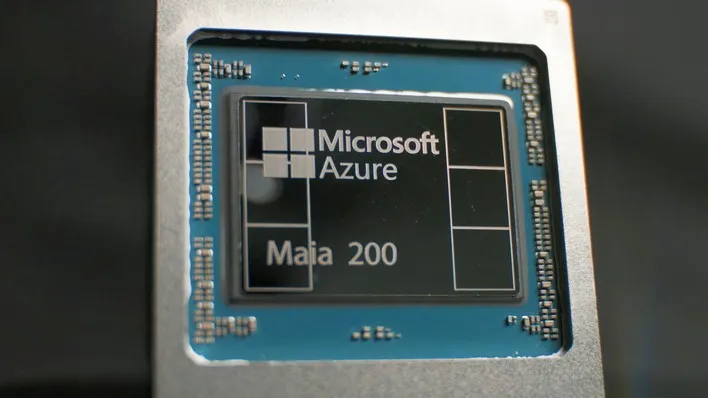
Microsoft Unveils Maia 200 AI Chip to Take On AWS, Google and Nvidia in Cloud AI Race. Microsoft has officially launched its next-generation AI accelerator chip, […]
Sarmad Hasan
February 23, 2026