Blogs

VPS for Gaming: The Ultimate Guide
January 19, 2026
AMD vs Intel CPUs: Powerful 2026 Comparison That Ends Confusion
January 21, 2026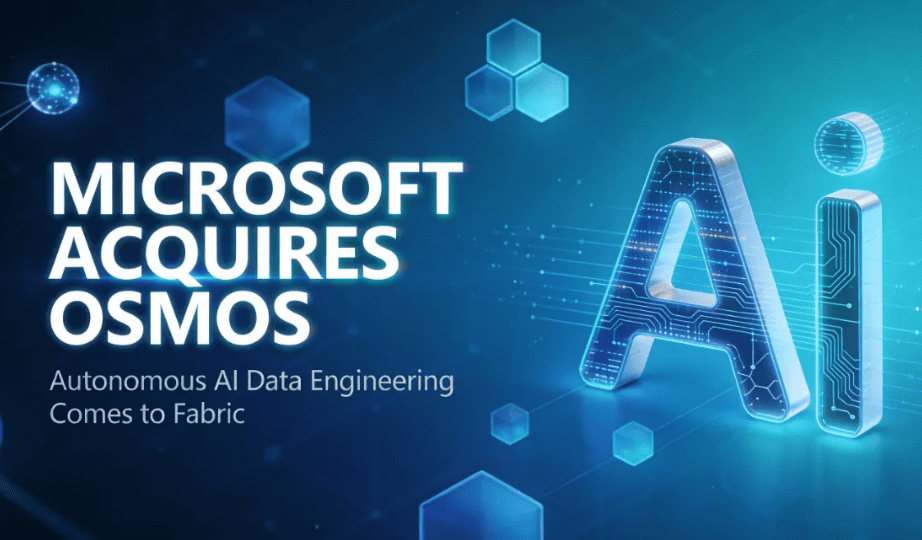
Microsoft acquires Osmos to supercharge AI-driven data engineering in Fabric. This makes it a strategic move to accelerate and simplify data workflows within its Microsoft Fabric analytics platform. Financial terms of the deal were not disclosed.
The acquisition targets one of the most persistent challenges facing enterprise data teams, the heavy lift of preparing raw data for analytics and AI. By embedding Osmos’ agentic artificial intelligence technology directly into Fabric, Microsoft aims to automate mundane tasks such as data ingestion, cleansing, schema reconciliation, and pipeline generation, allowing technical teams to spend more time on high-value work such as data quality, governance, and advanced analytics.
“Osmos helps address the barrier between raw data and actionable insights by empowering Fabric users to go from data arrival to analytics readiness with fewer manual steps,” a Microsoft spokesperson said in a statement.
Microsoft Acquires Osmos To Boost Fabric’s Unified Data Strategy
Launched in 2023, Microsoft Fabric was designed to unify data engineering, storage, warehousing, analytics, and AI workloads under one SaaS platform centered on OneLake, a unified data lake. While the platform has rapidly evolved with features like Fabric IQ, an AI-enhanced user experience, data readiness had remained a bottleneck for many organizations. Osmos’ agentic AI capabilities are expected to narrow this gap by autonomously transforming unstructured or semi-structured data into analytics-ready formats.
Industry analysts say the deal not only deepens Fabric’s technical capabilities but also strengthens its competitive stance against rivals such as Snowflake and Databricks, which still depend more heavily on manual engineering and third-party tools to handle complex data pipelines.
Microsoft Acquires Osmos: What This Means for Developers and Customers?
For data engineers and developers, the integration of Osmos promises to reduce repetitive work and boilerplate coding. Tasks such as data wrangling, mapping inconsistent external feeds, and scaffolding transformation pipelines could be generated by AI agents, shifting the focus to reviewing and refining outputs rather than building them from scratch.
However, the transition is not seamless for all. As part of the acquisition, Osmos will sunset its standalone products including Osmos Data Agents for Microsoft Fabric, Osmos Data Agents for Databricks, and the Osmos AI-Assist Suite. These tools will be phased out in January as their capabilities become native within Fabric, leaving previous non-Microsoft customers to explore alternatives or adapt to Microsoft’s integrated platform.
Microsoft Acquires Osmos: What’s Next?
Microsoft’s move underscores a broader industry trend: harnessing autonomous AI not just at the application layer but deep within enterprise data infrastructure. By embedding AI-driven automation into the core of data platforms, vendors hope to dramatically reduce the time, cost, and complexity involved in turning raw data into insights, a key competitive differentiator as data volumes and business expectations continue to grow.
Microsoft acquires Osmos to supercharge AI-driven data engineering in Fabric. How will this move impact the industry as a whole? Share your thoughts with us in the comments section below.

Featured Post
Snowflake and OpenAI Seal $200M Strategic Alliance to Transform AI For Enterprise Data Platforms
Snowflake, the AI Data Cloud leader, and OpenAI this week announced a multi-year, $200 million strategic partnership that will bring advanced artificial intelligence models directly into […]

saad ullah
March 4, 2026

Cisco Live EMEA 2026: Powering the AI Era with Smarter Networks, Security, Collaboration and Agentic Intelligence
At Cisco Live EMEA 2026 in Amsterdam, Cisco unveiled a sweeping portfolio of innovations designed to transform enterprise infrastructure, secure AI-driven environments, and redefine workplace collaboration […]

Sarmad Hasan
February 25, 2026
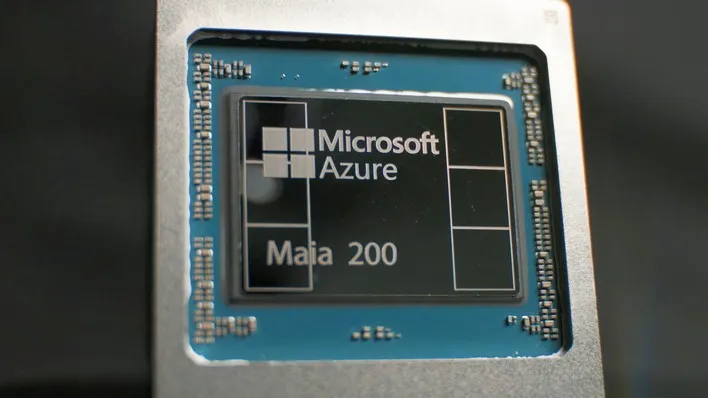
Microsoft Unveils Maia 200 AI Chip to Take On AWS, Google and Nvidia in Cloud AI Race
Microsoft Unveils Maia 200 AI Chip to Take On AWS, Google and Nvidia in Cloud AI Race. Microsoft has officially launched its next-generation AI accelerator chip, […]
Sarmad Hasan
February 23, 2026