Blogs
Finest Dedicated Server for Telecommunication Guide in 2026
September 29, 2025
Hostinger Alternatives: Top 10 Options That Deserve Your Attention
October 2, 2025
on
5 Common Negative Consequences of Downtime For Businesses
A recent survey conducted by Cradlepoint, a subsidiary of Ericsson, revealed significant reliability issues in wired network connectivity for U.S. businesses, with nearly 90% of respondents experiencing one to four hours of network downtime weekly.
The annual connectivity report highlights the adverse impacts of this downtime on business operations and indicates that more than half of the decision-makers surveyed are contemplating the adoption of cellular solutions to address these challenges, reflecting a critical need for improved network resilience and stability.
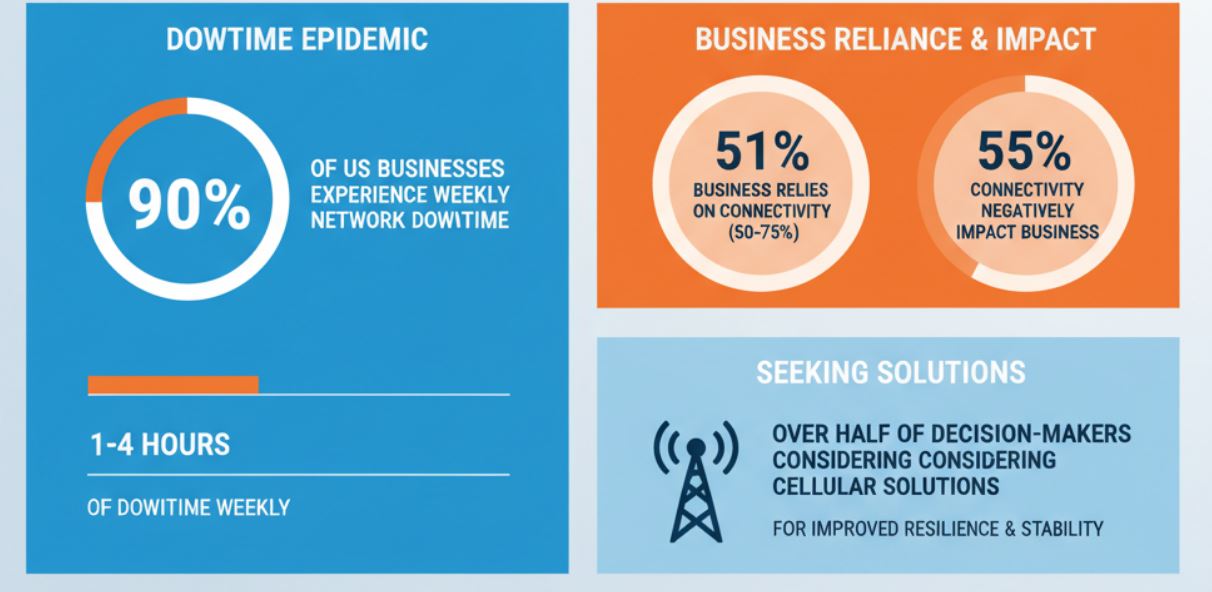
According to Cradlepoint’s State of Connectivity 2024 report, 51% of respondents said that 50% to 75% of their business relies on connectivity. 55% said that connectivity issues hurt their business. Cradlepoint’s state of connectivity 2024 report included 1000 senior business leaders from businesses that have more than 250 employees. The survey also shed light on five negative consequences of downtime on businesses.
In this article, you will learn about five negative consequences of downtime for businesses.
5 Common Negative Consequences of Downtime For Businesses
Here are five common negative consequences of downtime.
1. Operational Inefficiencies
Downtime can disrupt your business and negatively impact business continuity. If your business is heavily reliant on servers, data centers, or IT systems, downtime can lead to operational bottlenecks. Industries like manufacturing and e-commerce can not afford even a minor disruption, as it directly impacts their business revenue. Similarly, if you work in a critical industry such as healthcare and power generation, a minor delay can lead to fatal consequences.
2. Rehostputation Damage
One of the negative consequences of downtime can dent your business reputation badly, especially if it occurs frequently. It will not only leave a bad taste in the user’s mouth but also decrease your customer trust in your brand. Developing and maintaining a good brand reputation is crucial for the success of your business.
3. Higher Operational Costs
Downtime can also lead to an immediate spike in operational costs. Businesses may need to allocate additional resources to resolve the outage and to handle its aftermath, including customer service support, overtime wages for staff, and technical remedies.
These are direct costs, but there are indirect costs as well, such as the need for additional marketing efforts to rebuild trust and regain customer loyalty. Additionally, there may be legal or regulatory penalties if the downtime results in breaches of compliance, particularly in data-sensitive environments.
4. Revenue Loss
Downtime can also negatively impact your business’s bottom line. Even though the impact and severity might vary from industry to industry, it always hurts your business revenue. That is why businesses should take steps to prevent downtime and disruptions.
5. Loss of Talent
While less immediately obvious than some other impacts, downtime can also affect a company’s ability to retain and attract talent. Today’s workforce expects to work in an environment where technology is an enabler, not a hindrance. Frequent downtimes not only frustrate employees but also lower overall morale and productivity. Talented individuals may start looking for opportunities in more technologically stable companies, leading to a brain drain that could affect a company’s long-term ability to innovate and compete.
How To Mitigate the Risks?
To address these challenges, businesses must invest in robust disaster recovery and business continuity planning. This involves not only implementing the right technology solutions but also regularly testing them to ensure they are effective in a crisis.
Proactive monitoring of IT systems and infrastructure can help identify potential issues before they cause downtime. Additionally, clear communication strategies must be in place to inform customers and stakeholders promptly and effectively in the event of an outage, thus managing perceptions and minimizing reputational damage.
How Are Businesses Using Alternative Network Connections?
Here are some of the ways in which organizations are putting their alternative network connections to good use.
- Digital signage
- Security and surveillance systems
- Fleet management
- Work from home support
- Industrial Internet of Things
Many businesses are utilizing cellular networks to enhance their security and surveillance capabilities. By leveraging cellular connectivity, security devices such as cameras and alarm systems can maintain constant communication with monitoring centers. In addition, integrating a cloud NVR (Network Video Recorder) allows video footage to be securely stored, managed, and accessed remotely, ensuring reliable backup, real-time monitoring, and easy scalability without the need for extensive on-site hardware.
Retail stores, transportation hubs, and public venues often use digital signage to display dynamic content such as advertisements, directions, and announcements. Cellular connectivity allows for immediate content updates and system management remotely, reducing the need for on-site technical support and infrastructure.
In fleet management, cellular connectivity is utilized to track and manage vehicles efficiently. This includes real-time GPS tracking, monitoring vehicle health, optimizing routes, and ensuring compliance with regulatory requirements. Cellular networks allow for continuous data transmission between the fleet vehicles and central management systems, providing up-to-date information on vehicle locations and statuses, which is crucial for optimizing operational efficiency and improving safety.
As remote work becomes more common, cellular networks are playing a critical role in ensuring employees remain connected and productive from home. Cellular connectivity provides an alternative to traditional broadband, particularly in areas where high-speed internet options are limited.
It allows employees to access corporate networks, collaborate with colleagues, and utilize cloud services seamlessly, thereby supporting a distributed workforce effectively. Industrial IoT devices are increasingly connected via cellular networks to monitor and control various aspects of industrial operations. This includes sensors and actuators in manufacturing lines, energy grids, and more. Additionally, for individuals using mobile data for entertainment and streaming, choosing the best vpn for Netflix can help encrypt their connection and enhance privacy while accessing content over cellular networks.
Adoption of 5G Connectivity
The increasing adoption of 5G connectivity in enterprise businesses is evident, with an Enterprise Management Associates (EMA) report highlighting that 86% of enterprise users either currently utilize or plan to integrate wireless Wide Area Network connectivity (4G/5G) into their corporate networks.
Furthermore, a significant 90% of these businesses intend to use wireless wide area networks as the main network connection for at least some of their sites. This trend underscores the growing appeal of 5G technology in the enterprise sector, despite its relative novelty and the evolving infrastructure.
5G Adoption Challenges
However, there are notable hesitations among technology decision-makers regarding full reliance on cellular connectivity, primarily due to several significant concerns. A Cradlepoint survey revealed that 33% of respondents are deterred by a skills shortage necessary for adopting 5G, while 31% are uncertain about the security implications it may pose across their organizations.
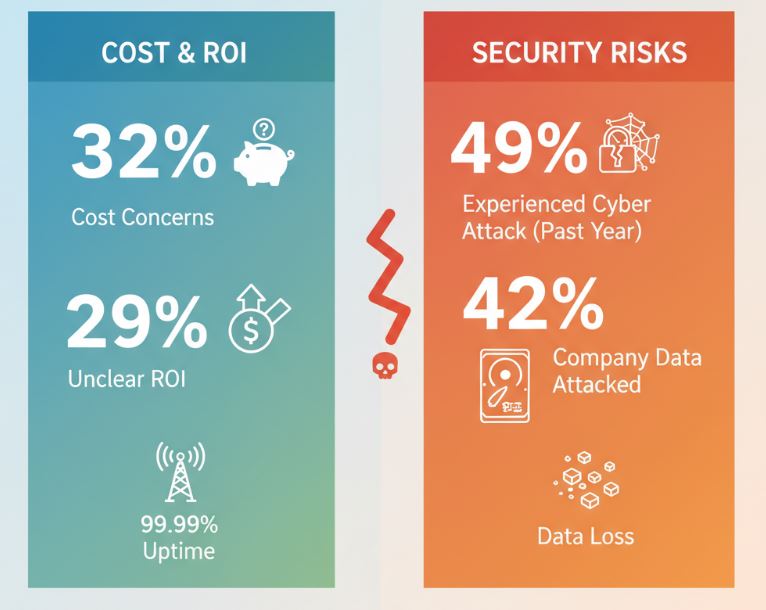
Additionally, concerns about cost and the unclear return on investment are prominent, with 32% and 29% of organizations, respectively, expressing these concerns, even though cellular networks reportedly offer up to 99.99% uptime. Security remains a critical issue, with nearly half (49%) of the surveyed businesses experiencing a network security attack within the past year, where 42% suffered attacks on company data, often leading to data loss.
Conclusion
These findings highlight the critical need for enterprises to prioritize secure and resilient network connectivity amidst the challenges posed by economic uncertainties, evolving technologies, advanced threats, and a growing demand for skilled professionals. The emphasis is on achieving controllable, scalable, and secure networking for essential business operations through strategic 5G implementation.
How does downtime negatively impact your business? Share your experience with us in the comments section below.

Featured Post
How to Migrate Your Website to a New Host Without Downtime?
Website downtime during migration is one of the biggest concerns for site owners looking to switch hosting providers. Whether you are looking for better performance, more […]

Sarmad Hasan
December 8, 2025
9 Common Causes of Network Outages
Power-related issues remain the leading cause of major data center outages, responsible for 54% of cases according to Uptime Institute’s 7th annual outage analysis report, while […]
Sarmad Hasan
November 21, 2025

WHOIS Lookup: Everything You Need To Know
Table of Contents Key Takeaways: What is WHOIS Lookup? What is the Purpose of WHOIS? 1. Domain Registration Information. 2. Contact Information. 3. Name Server Information. […]

Hostnoc Editorial
January 5, 2024