Blogs
7 Powerful Steps to Build a VPS Email Server (No Stress)
March 26, 2025
No Lag BeamMP Server Hosting: 5 Smart Setup Tricks
March 31, 2025
on
Why Are Strong Passwords Important in Cybersecurity?
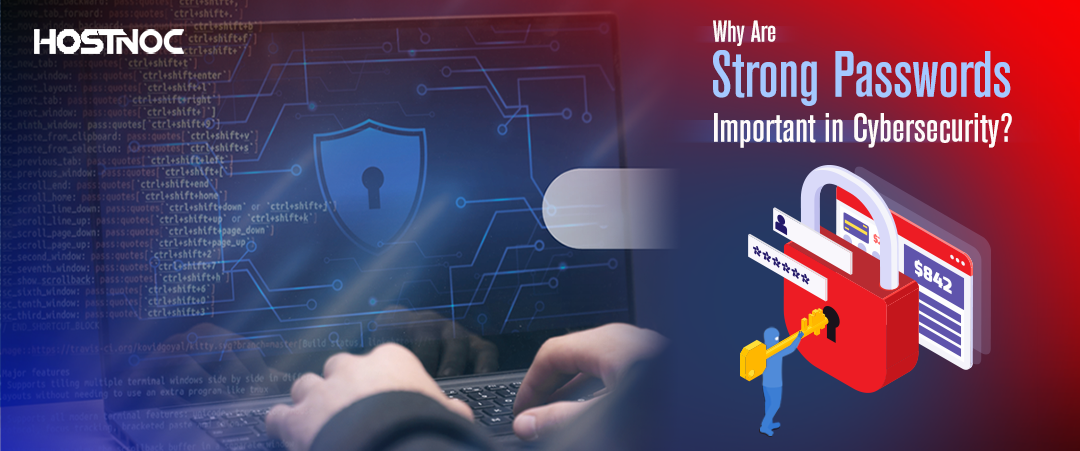
Strong passwords play a pivotal role in safeguarding personal and organizational data from cyber threats. They act as the first line of defense against unauthorized access to sensitive information, helping to prevent identity theft, financial loss and data breaches. As cybercriminals continually evolve their methods, ensuring passwords are robust and secure has become essential for maintaining privacy and security in the digital age.
In this article, you will learn why strong passwords are critical for cybersecurity.
The Role of Passwords in Cybersecurity
A Strong Passwords serves as a key to your online identity. It secures access to your accounts by ensuring that only you can use them. Whether it is a bank account, a work-related account, or a personal social media profile, a password is designed to protect your sensitive data from unauthorized access. The more complex and unpredictable a password is, the more secure your online presence becomes.
However, many people still opt for weak, easily guessable passwords, making them vulnerable to cyberattacks such as hacking, phishing, and identity theft. Cybercriminals use sophisticated methods like brute-force attacks, social engineering, and keylogging software to crack weak passwords and steal personal information.
Why Are Strong Passwords Important?
The primary purpose of a strong password is to protect you from cyber threats. In a world where data breaches are increasingly common, a strong password is the first line of defense in safeguarding your personal and financial data.
Let’s look at a few reasons why strong passwords matter:
Protection from Brute Force Attacks
A brute-force attack occurs when a cybercriminal uses a computer program to systematically try every possible combination of characters until the correct one is found. The more characters and complexity a password has, the longer it takes to crack, making it a crucial defense against these types of attacks.
Preventing Account Hijacking
Cybercriminals often target accounts with weak passwords to take control of them. If your password is something obvious, such as your name or birthdate, it is easy for hackers to guess or figure out. Once they gain access to an account, they may steal personal data, make fraudulent transactions, or commit other malicious activities.
Protecting Sensitive Information
Online services store everything from your email correspondence to financial transactions. If hackers can gain access to such information, it could lead to significant personal harm, including identity theft or financial loss. According to CyberNews, when comparing Aura vs LifeLock, both services offer robust identity theft protection, but users should evaluate features carefully to choose the solution that best safeguards their personal information.
Safeguarding Against Phishing
Phishing is a technique where attackers trick individuals into revealing their credentials by pretending to be legitimate entities. Strong passwords, in combination with multi-factor authentication (MFA), provide a second layer of protection even if a phishing attack successfully steals a password.
Preventing Data Breaches
With large-scale data breaches happening frequently, many organizations suffer the loss of millions of user passwords. If you reuse passwords across different sites, a breach at one organization could lead to the compromise of multiple accounts. Strong, unique passwords for each service significantly reduce this risk.
Read more:7 Steps to Safeguarding Your Website Against DDoS Attacks
How to Create a Strong Password?
Creating a strong password involves more than just selecting a combination of random letters and numbers. To ensure your password is robust enough to defend against attacks, follow these principles:
Length Matters
The longer the password, the harder it is to crack. A password that is at least 12–16 characters long is ideal. Longer passwords exponentially increase the difficulty for hackers to break them using brute-force attacks.
Use a Combination of Characters
A strong password should include a mix of uppercase and lowercase letters, numbers, and special characters like @, #, $, and %. This variety creates a higher level of complexity, making it more resistant to guessing or brute-force attacks.
Avoid Personal Information
Your name, birthdate, username or any easily accessible personal information should be avoided in passwords. Attackers can easily gather such information from social media profiles or public databases.
Use Unique Passwords for Each Account
One of the most important tips for maintaining cybersecurity is not reusing passwords across multiple platforms. If one account is compromised, hackers could use the same password to access your other accounts. Instead, create a unique password for each service you use.
Consider Using a Password Manager
It can be difficult to remember complex, unique passwords for every account. A password manager is a tool that securely stores and organizes your passwords, making it easier to use strong passwords across all of your accounts without the need to remember them all. Tools like the Bitdefender password manager support secure password handling and import/export for straightforward migration across devices.
Read more: 7 Cybersecurity Trends You Cannot Afford to Miss in 2021
What to Avoid in Passwords?
Here are some of the things you need to avoid when choosing the right password.
Common Passwords:
“123456“, “password“, or “qwerty” are among the most commonly used passwords and should be avoided at all costs. Cybercriminals know that many people use these weak passwords, and they are often the first guesses in brute-force attacks.
Repetitive Characters:
Passwords such as “aaaaaa” or “111111” are easy for attackers to guess.
Personal Information:
Avoid using easily obtainable details, such as your birthday, your child’s name, or your address.
Conclusion
In a world where digital threats are evolving rapidly, a strong password is one of the most essential tools in protecting yourself online. While it may seem like a small step, creating and maintaining strong, unique passwords is crucial for safeguarding your personal, financial, and sensitive information from cybercriminals.
By following best practices and using tools like password managers, you can ensure that your online presence remains secure and protected from malicious threats. Remember, cybersecurity is not just the responsibility of the platforms you use; it is also up to you to create a solid defense through strong passwords.
Did this article help you in understanding the importance of using strong passwords for cybersecurity? Share it with us in the comments section below.
Don’t let hardware hold you back—go cloud and unleash unlimited possibilities!
Cores
RAM
Storage
Location
Monthly Price
Link
AMD Opteron 3365 2.3GHz 8c/8t
16 GB DDR3
2x 1 TB (HDD SATA)
Dusseldorf, Germany
$30.95 /month
Buy Now
Intel Atom C2750 2.4 GHz 8 cores
16GB DDR3
1 x 1TB HDD
Paris, France
$34.99 /month
Buy Now
Intel Xeon D-1531 2.2GHz 6c/12t
32 GB DDR4
2x 256 GB (SSD SATA)
Paris, France
$44.50 /month
Buy Now
Intel Core i7-4790K 4GHz 4c/8t
32 GB DDR3
2x 1 TB (HDD SATA)
Dusseldorf, Germany
$48.95 /month
Buy Now
Intel Xeon E3-1220 v2 or better 3.1 GHz 4c/4t
32 GB DDR3
2× 1 TB (SSD SATA)
Amsterdam, Netherlands
$56.95 /month
Buy Now
Intel X5670 2.93 GHZ - 12 Cores / 24 Threads
16GB DDR3
1 x 240 GB SSD
Florida
$74.99 /month
Buy Now

Muhammad Osama
Muhammad Osama a qualified professional with ground-breaking experience in developing SEO campaigns, analytics, and monitoring the ranking in Google search pages. A clear communicator with an experience of digital marketing and improving brand search ranks.
Featured Post
7 Key Takeaways from the IBM X-Force 2026 Threat Intelligence Index
The IBM X-Force Threat Intelligence Index 2026 paints a stark picture of the modern cyber threat landscape, one where artificial intelligence (AI) accelerates the pace of […]

Sarmad Hasan
March 13, 2026
SSL Certificate Chain: A Comprehensive Guide
In the modern era of the internet, security is of utmost importance, especially when sensitive data such as passwords, credit card numbers, and personal information is […]
Sarmad Hasan
February 6, 2026
7 Cybersecurity Trends That Will Dominate in 2026
As we approach 2026, the digital landscape continues to evolve at an unprecedented pace, bringing both innovation and new threats. Cybersecurity has become a cornerstone of […]
Sarmad Hasan
September 25, 2025