Blogs

DMCA Optimized Dedicated Server: Why Does It Matter?
July 16, 2025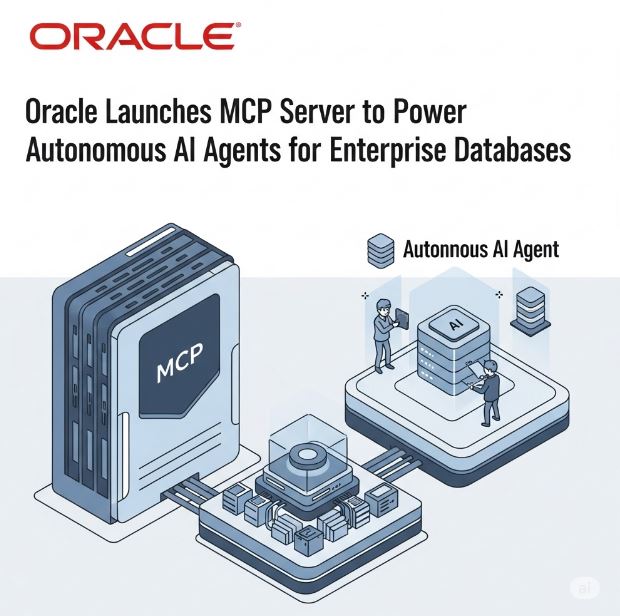
Oracle Launches MCP Server to Transform Autonomous AI Agents for Enterprise Databases
July 21, 2025
on
Dedicated Server for FinTech: The Ultimate Guide

In the FinTech industry, security, speed and reliability are non-negotiable. The choice of hosting infrastructure plays a critical role, especially with the heavy demands of AI in FinTech applications. A dedicated server for FinTech is often the preferred choice for companies looking to provide top-notch financial services while maintaining the highest levels of data integrity and compliance. This article delves into why dedicated servers are indispensable for FinTech businesses and how they address specific industry challenges.
Table of Contents
Dedicated Server for FinTech
Why Do FinTech Companies Need Dedicated Servers?
Here are some of the reasons why FinTech companies need a dedicated server.
1. Enhanced Security
Security breaches in the financial sector can result in catastrophic losses. Dedicated servers provide an isolated environment, minimizing the risk of attacks that exploit shared resources. With the ability to deploy advanced firewalls, intrusion detection systems and regular security audits, FinTech companies can safeguard their clients’ data.
2. Regulatory Compliance
FinTech businesses operate under stringent regulatory frameworks such as General Data Protection Regulation (GDPR), Payment Card Industry Data Security Standard (PCI-DSS) and System and Organization Controls 2 (SOC 2).
Dedicated servers allow companies to meet these compliance requirements by providing customizable security measures and data residency options. Many hosting providers offer certifications that simplify compliance audits.
3. High Performance
The financial industry relies heavily on real-time data processing and transaction handling. Dedicated servers eliminate the latency issues common in shared hosting environments, ensuring seamless operations for trading platforms, payment gateways and financial analytics tools.
4. Scalability and Customization
As FinTech startups grow into larger enterprises, their infrastructure needs to scale. Dedicated servers offer the flexibility to upgrade resources, be it CPU, RAM or storage that too without downtime. Custom server configurations allow businesses to tailor their servers to specific workloads, ensuring optimal performance.
5. Business Continuity
Downtime can lead to significant financial losses and damage to reputation. Dedicated servers provide enhanced reliability with robust server hardware, redundant power supplies and round the clock server monitoring, ensuring high availability for mission-critical applications.
Read more: Ultimate Guide To Cloud Native Application Protection Platform
Key Features to Look for in a Dedicated Server for FinTech
When choosing a dedicated server for FinTech, consider the following key features.
1. Top-Notch Security Protocols
Look for servers equipped with DDoS protection, end-to-end encryption and advanced intrusion detection systems.
2. High-Speed Connectivity
Ensure the hosting provider offers low-latency networks with multiple redundant connections for uninterrupted service.
3. Customizable Hardware Options
The ability to select processors, storage types and memory ensures that your server meets your unique requirements.
4. Comprehensive Support
A hosting provider with round the clock technical support and proactive server monitoring is essential for minimizing disruptions.
5. Compliance Certifications
Choose a server provider that adheres to financial industry regulations, making compliance easier.
Read more: Future of Hosting: Predictions and Innovations in the Industry
Real-World Use Cases
Here are some of the real world use cases of dedicated servers in FinTech.
1. Online Trading Platforms
Online trading platforms demand real-time data processing and instantaneous execution of trades. Dedicated servers ensure low-latency connections and high availability, enabling traders to operate without disruptions.
2. Payment Gateways
Payment gateways process sensitive financial data and require Payment Card Industry Data Security Standard (PCI-DSS) compliance. Dedicated servers offer the secure environment necessary to handle millions of transactions daily.
3. Financial Analytics
Financial analytics tools rely on processing vast amounts of data to provide insights. Dedicated servers ensure the computational power and reliability needed for these resource-intensive tasks.
Read more: Dedicated Server for SaaS Startups: How to Choose the Right One?
Benefits of Using Dedicated Servers for FinTech
Here are some of the benefits of using a dedicated server for FinTech.
1. Improved Customer Trust
By leveraging dedicated servers, FinTech companies can demonstrate their commitment to security and reliability, fostering trust among clients.
2. Optimized Costs in the Long Run
The initial investment in dedicated servers is higher but the long-term benefits in terms of reduced downtime, enhanced security and improved performance outweigh the costs.
3. Seamless Global Operations
Many dedicated server providers offer global data centers, enabling FinTech companies to expand their services worldwide without compromising performance or compliance.
Read more: Hyve vs Hostnoc: Which One You Should Choose?
How to Choose the Best Dedicated Server Provider For Your FinTech Company?
Here is how you can choose the best dedicated server provider for your FinTech company.
1. Research Reputation
Select a dedicated server provider with a proven track record in serving FinTech clients. Check for reviews and testimonials.
2. Evaluate Technical Support
Ensure the dedicated server provider offers 24/7 technical assistance and quick response times.
3. Consider Data Center Locations
Choose dedicated server providers with data centers in regions that align with your compliance and latency needs.
4. Assess Scalability Options
Verify that the dedicated server provider can scale resources as your business grows.
5. Review Service Level Agreements
Examine the service level agreements (SLA) to understand the uptime guarantees and penalties for non-compliance.
Conclusion
A dedicated server for FinTech is more than just a hosting solution; it is a strategic investment in performance, security and compliance. As the FinTech industry continues to evolve, businesses must prioritize robust infrastructure to stay competitive and meet the ever-growing demands of customers and regulators.
By carefully selecting a dedicated server tailored to your specific needs, you can ensure your FinTech business operates at peak efficiency, delivering unparalleled service to your clients. Did this article help you in choosing the best dedicated server for FinTech? Share your thoughts with us in the comments section below.
Serious hosting for serious businesses. No noise. No sharing. Just you and performance.
Cores
RAM
Storage
Location
Monthly Price
Link
AMD Opteron 3365 2.3GHz 8c/8t
16 GB DDR3
2x 1 TB (HDD SATA)
Dusseldorf, Germany
$30.95 /month
Buy Now
Intel Atom C2750 2.4 GHz 8 cores
16GB DDR3
1 x 1TB HDD
Paris, France
$34.99 /month
Buy Now
Intel Xeon D-1531 2.2GHz 6c/12t
32 GB DDR4
2x 256 GB (SSD SATA)
Paris, France
$44.50 /month
Buy Now
Intel Core i7-4790K 4GHz 4c/8t
32 GB DDR3
2x 1 TB (HDD SATA)
Dusseldorf, Germany
$48.95 /month
Buy Now
Intel Xeon E3-1220 v2 or better 3.1 GHz 4c/4t
32 GB DDR3
2× 1 TB (SSD SATA)
Amsterdam, Netherlands
$56.95 /month
Buy Now
Intel X5670 2.93 GHZ - 12 Cores / 24 Threads
16GB DDR3
1 x 240 GB SSD
Florida
$74.99 /month
Buy Now

Muhammad Osama
Muhammad Osama a qualified professional with ground-breaking experience in developing SEO campaigns, analytics, and monitoring the ranking in Google search pages. A clear communicator with an experience of digital marketing and improving brand search ranks.
Featured Post
Dedicated Server With GPUs: The Ultimate Guide
There are various types of servers, each designed to cater to different workloads and use cases. Among these, dedicated server with GPU (Graphics Processing Unit) have […]

Sarmad Hasan
November 12, 2025
Server Deployment: The Ultimate Guide
Server deployment is the process of making an application, website, or system available for use by installing, configuring, and running it on a server (physical or […]
Sarmad Hasan
November 3, 2025
Server Network: The Ultimate Guide
A server network is the backbone of modern business IT infrastructure, enabling communication between different devices, services, and systems. Whether for a small business, an enterprise, […]
Sarmad Hasan
October 30, 2025