Blogs

AWS, Microsoft and Google Back Linux Foundation’s DocumentDB to Slash Enterprise Costs and Fight Vendor Lock-In
September 3, 2025
Salesforce Drift Data Breach: Google, Cloudflare, Palo Alto Networks, ZScaler and Many More Impacted
September 8, 2025
on
7 Technology Trends That Will Dominate In 2026
As we move closer to 2026, the pace of technological innovation continues to accelerate, reshaping industries, redefining how we live and work and opening up unprecedented opportunities. From advancements in artificial intelligence to breakthroughs in quantum computing and biotechnology, the next wave of technology trends promises to push the boundaries of what’s possible.
In this article, HOSTNOC will highlight seven hottest technology trends that will make waves in 2026.
Table of Contents
- 7 Technology Trends That Will Dominate In 2026
- 1. Vertical AI Agents
- 2. Hybrid IT and Cloud Repatriation
- 3. AI-Powered Automation and Next-Generation Workflows
- 4. Edge Computing and 6G
- 5. Extended Reality (XR): AR and VR Go Mainstream
- 6. Bioprinting and Quantum Computing
- 7. Zero Trust and Green Tech
7 Technology Trends That Will Dominate In 2026
Here are seven technology trends that will dominate in 2026.
1. Vertical AI Agents
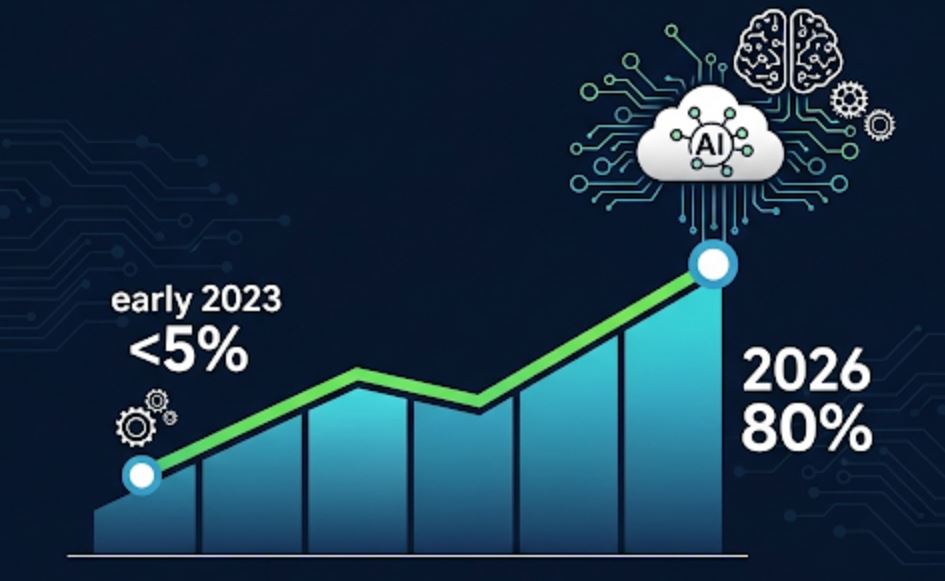
Generative AI is already transforming how content is created. By 2026, it’s expected to underpin 90% of digital content processes, ranging from text and imagery to music and code. Firms like Gartner predict that over 80% of enterprises will be connected to generative AI or large models by 2026, compared to less than 5% in early 2023.
Moreover, we are transitioning toward Vertical AI: domain-specific AI systems tailored to sectors like healthcare, logistics and retail. These models will offer contextual intelligence and refined decision-making. Implementing vertical AI agents enables organizations to automate complex, sector-specific tasks while maintaining high accuracy and relevance. Organizations not embracing generative or vertical AI risk falling behind in content creation and industry-specific competitiveness.
2. Hybrid IT and Cloud Repatriation
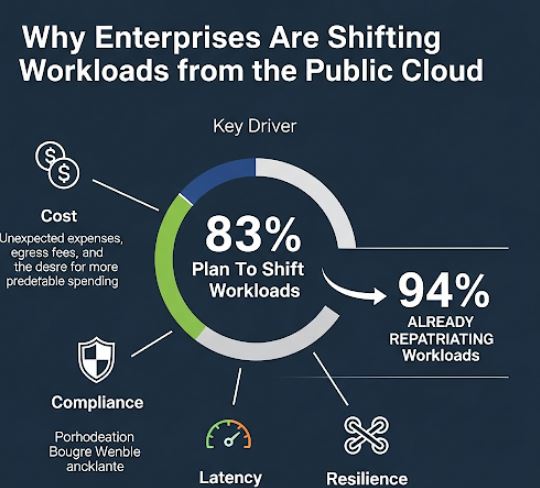
While the cloud surge dominated the early 2020s, 2025 marked a strategic shift. A Barclays survey revealed that 83% of enterprises plan to shift workloads off public cloud, with 94% of IT leaders already repatriating workloads, driven by cost, compliance, latency and resilience concerns. In 2026, hybrid IT strategies will blend public cloud with private or on‑premises server infrastructure will become the default architecture for enterprises seeking predictability and control.
3. AI-Powered Automation and Next-Generation Workflows
No longer futuristic, artificial intelligence will be embedded in everyday systems: drafting emails, cleaning data, reminding follow-ups and streamlining workflows. Phil Hobden, a judge at the Global Business Tech Awards, forecasts that artificial intelligence will quietly automate what used to be repetitive tasks across departments.
AI agents will manage entire workflows autonomously, from onboarding to customer service. This will free up humans to focus on strategic and creative roles. 2026 will bring seamless hybrid human-AI collaboration across business processes, with AI functioning less like a tool and more like a dynamic collaborator. One prominent example of this is seen among the modern day recruiters, they use resume parsing software (an AI based resume filtering tool) to filter out the most suitable candidates as per their requirement.
Read more: 7 Technology Trends That Will Dominate In 2024
4. Edge Computing and 6G
Edge computing will power low-latency applications from IoT devices to autonomous machines. Meanwhile, groundwork for 6G is underway. Emerging features include satellite integration, AI-driven optimization, terahertz communication and distributed edge support. Though commercialization is projected closer to the 2030s, pilot deployments and research breakthroughs in 2026 will push the envelope. Edge computing will become mainstream, enabling real-time, immersive experiences while 6G research begins maturing toward practical rollout.
5. Extended Reality (XR): AR and VR Go Mainstream
Extended Reality is poised to break free from niche status. From virtual retail try-ons to remote training simulations, immersive applications will become common in education, healthcare and commerce by the end of 2026. Quantumrun forecasts that 25% of online users may spend at least one hour daily in the Metaverse by the end of 2026. Extended Reality will transition into a foundational digital layer. This will effectively merge virtual and physical worlds in interactive contexts.
6. Bioprinting and Quantum Computing
Bioprinting or 3D printing of tissues and organs is gaining traction for personalized medicine, disease modeling and drug discovery. In 2026, bioprinting will shift from lab to limited clinical applications, Quantum computing will continue to mature. Even though the full-scale deployment might be years away, breakthroughs in quantum algorithms will drive progress in logistics, materials science and cryptography. Quantum research breakthroughs will reshape complex problem-solving pipelines.
7. Zero Trust and Green Tech
As systems become more interconnected and autonomous, cybersecurity becomes paramount. By 2026, AI-powered threat detection combined with Zero Trust architectures will be standard. Identity will be verified continuously, not at the perimeter. Simultaneously, sustainability is rising as a core pillar: green tech, energy-efficient data centers and carbon-conscious software will define modern tech leadership. Security and sustainability will no longer be optional add-ons; they’ll be embedded at the design stage of every system, trusted and eco-conscious by default.
Read more: Top 10 Technology Trends To Keep An Eye On In 2023
Conclusion
The year 2026 promises to deliver a leap, a shift from experimental technologies to practical, embedded transformations. From generative AI powering most content creation to AI handling workflows, to extended reality reshaping lived experiences and sustainability securing trust, this era will be marked by intelligent, intentional design.
Staying ahead in 2026 will mean:
- Adopting AI not just as a tool but as a strategic co-pilot.
- Rebalancing IT infrastructure for control, cost and compliance.
- Embracing immersive, low-latency experiences powered by edge and extended reality.
- Investing in emerging domains, from bioprinting to quantum computing before they explode.
- Embedding security and sustainability into every layer of innovation.
It’s a future tailored to progress and it’s closer than we think.
Which of these technology trends will create the biggest splash in 2026? Share your opinion with us in the comments section below.

Featured Post
10 Key Lessons CIOs learned in 2025
2025 has been a defining year for technology leaders. From the acceleration of AI-driven decision-making to the urgent demands of cybersecurity resilience and digital sustainability, CIOs […]

Sarmad Hasan
November 19, 2025
7 Big Issues That Will Continue to Haunt the IT Industry in 2025
Table of Contents 7 Big Issues That Will Continue to Haunt the IT Industry in 2025 1. Escalating Cybersecurity Threats 2. Talent Shortages and the IT […]

Muhammad Osama
February 13, 2025

7 New Year Resolutions IT Leaders Must Set and Achieve in 2025
Table of Contents 7 New Year Resolutions IT Leaders Must Set 1. Enhance Cybersecurity Posture to Counter Evolving Threats 2. Accelerate Digital Transformation Efforts 3. Adopt […]
Muhammad Osama
January 8, 2025