


Server infrastructure is entering a new phase. The conversation is no longer simply about choosing between cloud and dedicated servers or buying faster CPUs. In 2027, server architecture will increasingly be defined by AI inference, rack-scale computing, power density, liquid cooling, custom accelerators, high-bandwidth memory, and software-defined infrastructure.
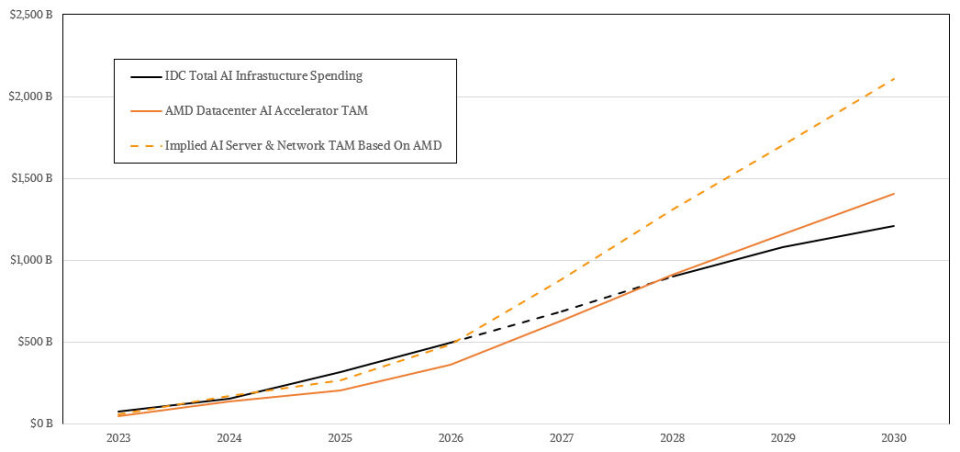
IDC reported 30.7% year-over-year growth in worldwide server spending in Q1 2026, while TrendForce expects hyperscaler capital expenditure to reach roughly $1.3 trillion in 2027. At the same time, AI server designs are moving toward increasingly integrated racks rather than conventional standalone systems.
For businesses planning infrastructure purchases, data-center operators expanding capacity, and hosting providers designing their next generation of platforms, these seven server trends deserve particular attention. In this article, HostNOC shares seven server trends that will dominate in 2027.
Table of Contents
7 Server Trends You Cannot Afford to Ignore in 2027
- AI Inference Will Reshape the Server
- Rack-Scale Computing Will Replace the Traditional Server Mindset
- Liquid Cooling Will Become a Standard Server Requirement
- Custom Silicon and Arm Servers Will Take More Workloads
- Memory and Storage Will Become Performance Bottlenecks
- Power Availability Will Become a Server Deployment Constraint
- Hybrid, Edge and Software-Defined Infrastructure Will Become the Default
7 Server Trends You Cannot Afford to Ignore in 2027
Here are seven server trends you can not afford to ignore in 2027.
1. AI Inference Will Reshape the Server
The first wave of AI infrastructure was dominated by training enormous models. In 2027, AI inference will become an equally important driver of server architecture.
Applications such as AI agents, enterprise copilots, real-time recommendation systems, fraud detection, computer vision, voice assistants, and retrieval-augmented generation require inference to happen continuously and, increasingly, close to the user.
That changes the economics of infrastructure. A training cluster may be concentrated in a hyperscale data center, but inference infrastructure can be distributed across cloud regions, private data centers, colocation facilities and edge locations.
This is creating demand for heterogeneous servers combining x86 or Arm CPUs, GPUs, NPUs, AI ASICs, high-bandwidth memory and high-speed networking. Companies such as NVIDIA, AMD, Google and Amazon Web Services are increasingly pursuing complete AI infrastructure platforms rather than treating the accelerator as an isolated component.
For server buyers, the important question in 2027 will therefore be less “How many CPU cores do I get?” and more “What workload is this server optimized to execute?”
2. Rack-Scale Computing Will Replace the Traditional Server Mindset
The conventional idea of a server as an independent 1U or 2U appliance is becoming less relevant for high-performance workloads.
AI infrastructure is increasingly designed as an integrated system containing compute, accelerators, memory, networking, power delivery and cooling. NVIDIA’s rack-scale platforms are a prominent example of this transition, while AMD is also moving toward integrated rack-scale systems such as its Helios architecture. TrendForce expects rack-level production and AI server deployments to remain major growth drivers through 2027.
This matters because performance increasingly depends on how components communicate across the rack, not simply on the performance of an individual server.
Technologies such as NVLink, InfiniBand, Ethernet, PCIe, CXL and high-speed optical interconnects will become increasingly important in determining cluster performance. Networking will effectively become part of the compute architecture.
For data-center operators, this also means infrastructure planning must happen at the rack level. Power distribution, cooling capacity, network topology and physical layout will need to be engineered together.
3. Liquid Cooling Will Become a Standard Server Requirement
Liquid cooling and air cooling will become two server trends you should keep an eye on.
Air cooling is approaching its practical limits as accelerator and rack power densities increase. TrendForce estimates that liquid-cooling penetration among AI chips could approach 60% in 2027, up from approximately 53% in 2026. Modern AI racks can consume hundreds of kilowatts, while individual high-end chips can exceed 1 kW of thermal design power.
That makes technologies such as direct-to-chip liquid cooling, cold plates, coolant distribution units (CDUs), manifolds and rear-door heat exchangers increasingly important.
The change will also extend beyond GPUs. Liquid cooling is moving toward CPUs, networking components, power boards and other high-density components as rack architectures become more thermally demanding.
For enterprises deploying new infrastructure in 2027, cooling should therefore be considered during server selection rather than treated as a data-center problem that comes later.
A server with excellent compute performance is not particularly useful if the facility cannot remove the heat it generates.
4. Custom Silicon and Arm Servers Will Take More Workloads
The dominance of traditional x86 servers will face increasing competition from Arm CPUs and custom accelerators.
Hyperscalers already have strong incentives to design their own silicon. Google’s TPU ecosystem, AWS Graviton and Trainium families, and proprietary accelerators from other cloud providers demonstrate the economic value of optimizing hardware for specific workloads.
The reason is straightforward: at hyperscale, even modest improvements in performance per watt or cost per inference can translate into enormous savings.
In 2027, server architecture will consequently become more heterogeneous. x86 processors from Intel and AMD will remain critical, but Arm CPUs, AI accelerators, DPUs and specialized ASICs will capture workloads where they offer better efficiency or economics.
This will make workload portability increasingly important. Kubernetes, containers, virtualization and multi-architecture software builds will help organizations avoid becoming unnecessarily dependent on one processor architecture.
The best server strategy will not necessarily be choosing one architecture. It will be choosing the right architecture for each workload.
5. Memory and Storage Will Become Performance Bottlenecks
For years, discussions about server performance focused heavily on CPU frequency and core counts. In 2027, memory bandwidth, memory capacity and data movement will be just as important.
AI workloads in particular are extremely sensitive to memory bandwidth. Technologies such as HBM, DDR5, CXL-attached memory and high-capacity NVMe storage are becoming central to modern server design.
CXL is especially significant because it enables new approaches to memory expansion and pooling, potentially allowing compute systems to use memory resources more flexibly instead of permanently tying every memory module to one processor.
Storage is evolving at the same time. High-density NVMe SSDs and PCIe Gen5 and Gen6 technologies will support increasingly data-intensive applications, including AI databases, vector databases, analytics platforms and large-scale content repositories.
IDC also expects memory and NAND supply constraints to remain a factor into at least the first half of 2027.
This means infrastructure teams should evaluate servers according to memory bandwidth, I/O throughput and data locality, not merely CPU specifications.
6. Power Availability Will Become a Server Deployment Constraint
In previous infrastructure cycles, organizations generally asked whether they had enough rack space. In 2027, a more important question will often be: Do we have enough power?
This turns server deployment into an energy-management problem. Power Usage Effectiveness (PUE) will remain important, but operators will increasingly examine performance per watt, inference per kilowatt-hour and total energy cost per workload.
Renewable energy, battery storage, on-site generation, heat reuse and smarter power-management systems will increasingly become part of server infrastructure planning rather than separate sustainability initiatives.
In other words, the future server is not just compute hardware. It is part of a tightly integrated compute, power and thermal system.
7. Hybrid, Edge and Software-Defined Infrastructure Will Become the Default
Organizations are unlikely to run every workload in one location. Instead, infrastructure will increasingly span public cloud, private cloud, dedicated servers, colocation, on-premises systems and edge locations.
AI makes this model particularly compelling. A centralized cloud region may be ideal for model training and large-scale data processing, while inference may need to run in a regional data center or at the network edge to reduce latency and bandwidth costs.
This also explains why dedicated servers are not disappearing. For workloads requiring predictable performance, data sovereignty, specialized hardware, consistent latency or better economics at sustained utilization, dedicated infrastructure can remain highly attractive.
The 2027 architecture will therefore not be “cloud versus dedicated.” It will be the right infrastructure for the right workload.
Conclusion
The server industry in 2027 will be defined by a fundamental change in what organizations expect from infrastructure. Servers will become more specialized, more interconnected, more power-dense and increasingly optimized around AI.
AI inference will drive accelerator adoption. Rack-scale architectures will redefine server design. Liquid cooling will become mainstream for high-density systems. Arm CPUs and custom silicon will expand. Memory and storage will become strategic performance considerations. Power availability will influence where servers can be deployed. And hybrid, edge and software-defined infrastructure will connect these environments into a single operating model. All these will be some of the biggest server trends you need to keep your eyes on in 2027.
The organizations that prepare early will have an advantage because these changes affect much more than server specifications. They influence data-center design, networking, cooling, power, software architecture, procurement and total cost of ownership.
In 2027, buying a server will increasingly mean buying into an entire infrastructure architecture—not simply choosing a box with a faster CPU. Which of these server trends will create the biggest splash in 2027? Share it with us in the comments section below.

Featured Post
Dedicated Server for Agencies: A Complete Guide
Agencies today manage multiple client websites, applications, and...

Does Borderlands 3 Have Dedicated Servers?
No. Borderlands 3 does not use dedicated servers. Multi player gaming sessions...

Data Center Market Share 2026: Hyperscalers vs. Colocation vs. Enterprise
The global data center industry is undergoing one of the most significant...


