


502 Bad Gateway Error: 12 Proven Ways to Fix It Fast (2026)
A 502 Bad Gateway error is an HTTP status code that indicates that a server is unable to process a request sent by a client. This error can occur for a variety of reasons, but it is usually caused by a problem with the server or with the network connecting the client and the server. In this article, we will provide a step-by-step guide on how to fix a 502 Bad Gateway error.
In this article, you will learn about ways you can use to fix the 502 bad gateway errors.
A 502 Bad Gateway error appears when a server acting as a gateway or proxy receives an invalid response from the upstream server behind it. In simple terms, one server asked another server for your page and got back something it could not use. According to the official MDN HTTP 502 reference, this is a server-side status code, which means the problem usually lives in the hosting stack, not in the visitor’s device.
🔑 Key Takeaways
- A 502 Bad Gateway error is a server-side problem caused by an invalid response between a proxy, load balancer or CDN and the origin server.
- Visitors can try quick fixes such as reloading the page, clearing the browser cache, flushing DNS or switching networks.
- Site owners should check the origin server first: crashed PHP-FPM workers, overloaded CPU or RAM, firewall blocks and timeout limits are the most common causes.
- Reliable hosting with enough resources and proactive monitoring prevents most recurring 502 errors.
The error can show up in many forms, such as “502 Bad Gateway”, “HTTP Error 502”, “502 Proxy Error”, “Bad Gateway: The proxy server received an invalid response from an upstream server” or a plain blank page with “502” on it. No matter how it looks, the cause is the same: communication between two servers broke down.
For a business website, every minute of a 502 Bad Gateway error means lost sales, frustrated users and wasted ad spend. It can also hurt search rankings if Googlebot keeps hitting the error. This guide explains what the error means, why it happens and 12 proven fixes for both visitors and website owners.
☰ Table of Contents (click to expand)
- What Is a 502 Bad Gateway Error?
- What Does a 502 Bad Gateway Error Look Like?
- 502 vs Other 5xx Errors
- What Causes a 502 Bad Gateway Error?
- How to Fix a 502 Bad Gateway Error as a Visitor
- How to Fix a 502 Bad Gateway Error on Your Website
- How to Fix a 502 Bad Gateway Error in WordPress
- How a 502 Bad Gateway Error Affects SEO
- How to Prevent 502 Bad Gateway Errors
- Conclusion
- FAQs
What Is a 502 Bad Gateway Error?
Most modern websites do not run on a single machine. A request often passes through a CDN, a reverse proxy such as Nginx, a load balancer and finally the application server running PHP, Node.js or Python. Each layer passes the request forward and waits for an answer.
A 502 Bad Gateway error occurs when one of these middle layers (the gateway) receives an invalid, empty or broken response from the server above it (the upstream). The gateway does not know how to handle the bad reply, so it returns status code 502 to the browser.
It belongs to the 5xx family of HTTP status codes, which all point to server-side issues. That is an important detail, because it tells you where to focus your troubleshooting.
What Does a 502 Bad Gateway Error Look Like?
Different servers, browsers and CDNs display the error in different ways. You may see any of these messages:
- 502 Bad Gateway
- HTTP Error 502 – Bad Gateway
- 502 Service Temporarily Overloaded
- 502 Proxy Error
- 502 Bad Gateway Nginx
- Error 502 Bad Gateway Cloudflare
- Temporary Error (502)
- The server encountered a temporary error and could not complete your request
Some websites also show a custom branded 502 page. Whatever the design, the meaning does not change.
502 vs Other 5xx Errors
It is easy to confuse a 502 Bad Gateway error with other server errors. The table below shows how they differ, so you can diagnose the right problem faster.
| Status Code | Meaning | Typical Cause |
|---|---|---|
| 500 Internal Server Error | The server hit an unexpected condition | Code bugs, broken .htaccess, plugin conflicts |
| 502 Bad Gateway | Gateway got an invalid response from upstream | Crashed PHP-FPM, overloaded origin, firewall blocks |
| 503 Service Unavailable | Server is temporarily unable to handle requests | Maintenance mode, traffic spikes, rate limits |
| 504 Gateway Timeout | Gateway did not get a response in time | Slow database queries, long-running scripts |
What Causes a 502 Bad Gateway Error?
Before you fix a 502 Bad Gateway error, it helps to understand the most common triggers. In our experience managing servers, these causes account for almost every case.
1. Overloaded or Crashed Origin Server
When traffic spikes or a heavy process eats all the CPU and RAM, the application server stops responding properly. The proxy in front of it then returns a 502. Shared hosting plans are especially prone to this because resources are split between many sites.
2. PHP-FPM or Application Process Failure
On WordPress and other PHP sites, Nginx forwards requests to PHP-FPM. If PHP-FPM crashes, runs out of worker processes or hits its memory limit, Nginx cannot get a valid reply. Node.js and Python apps behave the same way when the app process stops.
3. DNS Problems
If a domain recently moved to a new server, DNS records may still point to the old IP address. A misconfigured DNS record or slow DNS propagation can send requests to a server that no longer hosts the site.
4. Firewall or Security Rules Blocking Requests
Firewalls, security plugins and DDoS protection tools sometimes block legitimate traffic between the CDN and the origin. When the CDN’s IP addresses are blocked, every request comes back as a 502 Bad Gateway error.
5. Timeout Settings That Are Too Short
If the proxy timeout is lower than the time your application needs to build a page, the gateway gives up early. Large imports, reports and slow database queries often trigger this.
6. Faulty Plugins, Themes or Code
A badly coded plugin or theme can make PHP processes hang or crash. Recent updates are a frequent trigger, so always check what changed just before the error started.
7. CDN or Reverse Proxy Issues
Services such as Cloudflare sit between visitors and your server. A misconfiguration, SSL mismatch or a temporary outage at the CDN can cause the gateway to return a 502.
How to Fix a 502 Bad Gateway Error as a Visitor
If you are only visiting a website, the problem is usually on the server side. Still, a few quick steps can rule out issues on your end and often get the page loading again.
1. Reload the Page
Many 502 errors are temporary. Wait 30 to 60 seconds and press F5 or Ctrl + R. If the server was briefly overloaded, a simple reload may be all you need.
2. Check the URL and Website Status
Make sure the URL is typed correctly. Then use a tool such as “Down For Everyone Or Just Me” to see whether the site is down for everyone. If it is, the issue is on the website’s side and you can only wait or notify the owner.
3. Clear Your Browser Cache and Cookies
Your browser may be loading an old, cached copy of the error page. Clear your cache and cookies from the browser settings, or open the site in an incognito window to test quickly.
4. Try a Different Browser or Device
Open the website in another browser, or on your phone using mobile data. If it works there, the problem is local to your original browser or network.
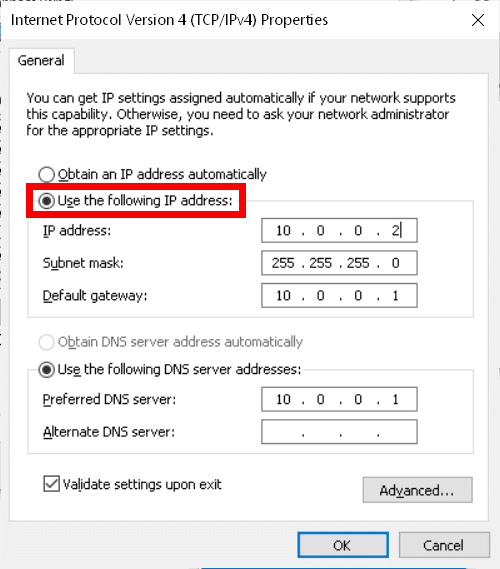
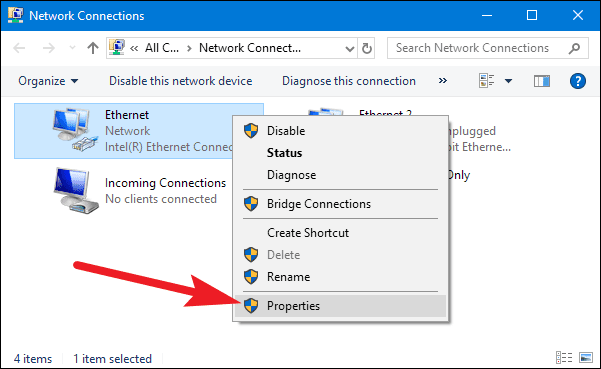
5. Flush Your DNS Cache
An outdated DNS cache can point your computer to the wrong server. On Windows, open Command Prompt and run ipconfig /flushdns. On macOS, run sudo dscacheutil -flushcache; sudo killall -HUP mDNSResponder in Terminal.
6. Restart Your Router and Modem
Unplug your router and modem for about 30 seconds, then plug them back in. This refreshes your connection and clears temporary network glitches.
HostNOC Tip: If a 502 Bad Gateway error appears on only one website and every fix above fails, the problem is almost certainly on that site’s server. Contact the site owner or try again later instead of changing more settings on your device.
How to Fix a 502 Bad Gateway Error on Your Website
If you own or manage the website, these server-side fixes solve most cases. Work through them in order, from the quickest checks to deeper configuration changes.
7. Check Your Server Resources and Logs
Start with the error logs. On Nginx, check /var/log/nginx/error.log. On Apache, check /var/log/apache2/error.log or /var/log/httpd/error_log. Look for messages such as “upstream prematurely closed connection” or “connect() failed”. Then check CPU, RAM and disk usage with tools like top, htop or df -h. A server that is constantly at 100% needs more resources.
8. Restart PHP-FPM and Your Web Server
A crashed or stuck service is one of the fastest things to fix. On most Linux servers you can run:
sudo systemctl restart php8.2-fpm
sudo systemctl restart nginx
Replace the PHP version with the one your server uses. If restarting solves the problem only for a short time, increase the number of PHP-FPM workers (pm.max_children) or the memory limit so the service stops crashing under load.
9. Increase Proxy and PHP Timeout Limits
If your application needs more time to respond, raise the timeout values. For Nginx with PHP-FPM, increase fastcgi_read_timeout. For Nginx as a reverse proxy, increase proxy_read_timeout and proxy_connect_timeout. In PHP, increase max_execution_time. Reload the services after each change.
10. Disable Plugins, Themes or Recent Code Changes
On WordPress, rename the wp-content/plugins folder through FTP or SFTP to deactivate all plugins at once. If the site loads, rename it back and enable plugins one by one to find the culprit. Do the same with the theme by switching to a default theme. If you recently deployed new code, roll it back and test again.
11. Check DNS, CDN and Firewall Settings
Confirm that your domain’s A record points to the correct server IP. If you use a CDN, pause it temporarily and access the origin directly. If the site works without the CDN, review SSL settings and make sure your firewall allows the CDN’s IP ranges. Also check security plugins that may be blocking requests by mistake.
12. Upgrade Your Hosting Plan
If your site keeps throwing a 502 Bad Gateway error during traffic peaks, the server simply does not have enough power. Moving from shared hosting to a VPS server or a dedicated server gives you guaranteed CPU, RAM and storage, so your application processes stop crashing under load.
Tired of 502 Errors Taking Your Site Down?
Run your website on high-performance HostNOC VPS and dedicated servers with NVMe storage, DDoS protection and 24/7 expert support.
How to Fix a 502 Bad Gateway Error in WordPress
WordPress sites face the 502 Bad Gateway error more often than many other platforms because of heavy plugins, page builders and PHP limits. Follow this quick checklist:
- Deactivate all plugins and re-enable them one at a time.
- Switch to a default theme such as Twenty Twenty-Five to rule out theme issues.
- Increase the PHP memory limit in
wp-config.phpwithdefine('WP_MEMORY_LIMIT', '256M');. - Check WP-Cron jobs and heavy background tasks that may overload PHP workers.
- Enable a caching plugin to reduce the number of requests that reach PHP.
- Use the latest supported PHP version for better speed and stability.
If none of these steps help, move to managed WordPress hosting, where the server stack is tuned for WordPress workloads.
How a 502 Bad Gateway Error Affects SEO
A short 502 Bad Gateway error that lasts a few minutes will not hurt your rankings. Google understands that servers have occasional issues and will simply crawl again later. However, if the error lasts for hours or keeps coming back, Googlebot may reduce your crawl rate and eventually drop affected pages from the index.
Repeated downtime also hurts user trust. Visitors who hit an error page often leave and do not come back. You can learn more about the business impact in our guide to the negative consequences of downtime.
A 502 error is rarely random. It is your server telling you that something in the stack is overloaded, misconfigured or broken.
How to Prevent 502 Bad Gateway Errors
Fixing the error is good, but preventing it is better. These best practices keep your site stable over the long term:
- Choose hosting with enough headroom. Plan for traffic spikes, not just average traffic.
- Monitor uptime and resources. Set alerts for high CPU, RAM and disk usage so you can act before a crash.
- Use caching and a CDN. Fewer requests reaching the origin means less load and fewer errors.
- Keep software updated. Update your web server, PHP, plugins and themes, but test updates on staging first.
- Tune PHP-FPM and timeouts. Match worker counts and limits to your server’s real capacity.
- Protect against attacks. DDoS floods are a common cause of overload. Read our guide on how to prevent DDoS attacks.
- Plan migrations carefully. Follow a checklist to migrate your website without downtime and avoid DNS-related 502s.
If you do not have time to manage all of this yourself, HostNOC’s server management services handle monitoring, tuning and updates for you.
Conclusion
A 502 Bad Gateway error means a gateway server received an invalid response from the server behind it. For visitors, quick fixes such as reloading, clearing the cache, flushing DNS or switching networks often help. For website owners, the real fix usually lies on the server: check logs and resources, restart PHP-FPM and the web server, raise timeouts, review plugins, verify DNS and CDN settings, and upgrade hosting when the site has outgrown its plan.
The best long-term protection is a stable, well-monitored hosting environment with enough resources to handle real-world traffic. That way, a 502 Bad Gateway error becomes a rare event instead of a regular headache.
Keep Your Website Online 24/7
Get fast, reliable HostNOC servers backed by proactive monitoring and expert support, so 502 errors never cost you customers.
FAQs
502 Bad Gateway Error: Frequently Asked Questions
Quick answers to the questions people ask most.
What is a 502 Bad Gateway error?
A 502 Bad Gateway error is an HTTP status code that means a server acting as a gateway or proxy received an invalid response from the upstream server. It is a server-side issue, so the cause usually lies in the hosting environment rather than the visitor’s device.
What causes a 502 Bad Gateway error?
The most common causes are an overloaded or crashed origin server, PHP-FPM failures, short timeout settings, DNS problems, firewall rules blocking CDN traffic, and faulty plugins, themes or code.
How do I fix a 502 Bad Gateway error on my website?
Check your server error logs and resource usage, restart PHP-FPM and the web server, increase proxy and PHP timeouts, disable plugins or recent code changes, verify DNS and CDN settings, and upgrade your hosting plan if the server lacks resources.
Can I fix a 502 Bad Gateway error as a visitor?
You can try reloading the page, clearing your browser cache, using a different browser or device, flushing your DNS cache and restarting your router. If the site is down for everyone, only the website owner can fix it.
Does a 502 Bad Gateway error hurt SEO?
A short error lasting a few minutes has little impact. Errors that last for hours or happen often can reduce Google’s crawl rate and may cause pages to drop from search results.
What is the difference between a 502 and a 504 error?
A 502 error means the gateway received an invalid response from the upstream server. A 504 error means the gateway did not receive any response in time. Both point to problems between servers.

Featured Post
How to Migrate Your Website to a New Host Without Downtime?
Website downtime during migration is one of the biggest concerns for site...

9 Common Causes of Network Outages
Power-related issues remain the leading cause of major data center outages, responsible...
5 Common Negative Consequences of Downtime For Businesses
5 Common Negative Consequences of Downtime For Businesses Here are five common...
Follow us on:


Get the Latest News & Deals
Sign up to receive the latest news, updates and special offers from HostNOC.
I'd like to receive: