Blogs
SoftBank Invests $2 Billion in Intel as U.S. Government Eyes 10 % Stake in Chipmaker
August 19, 2025
Server Load Balancing: The Ultimate Guide
August 22, 2025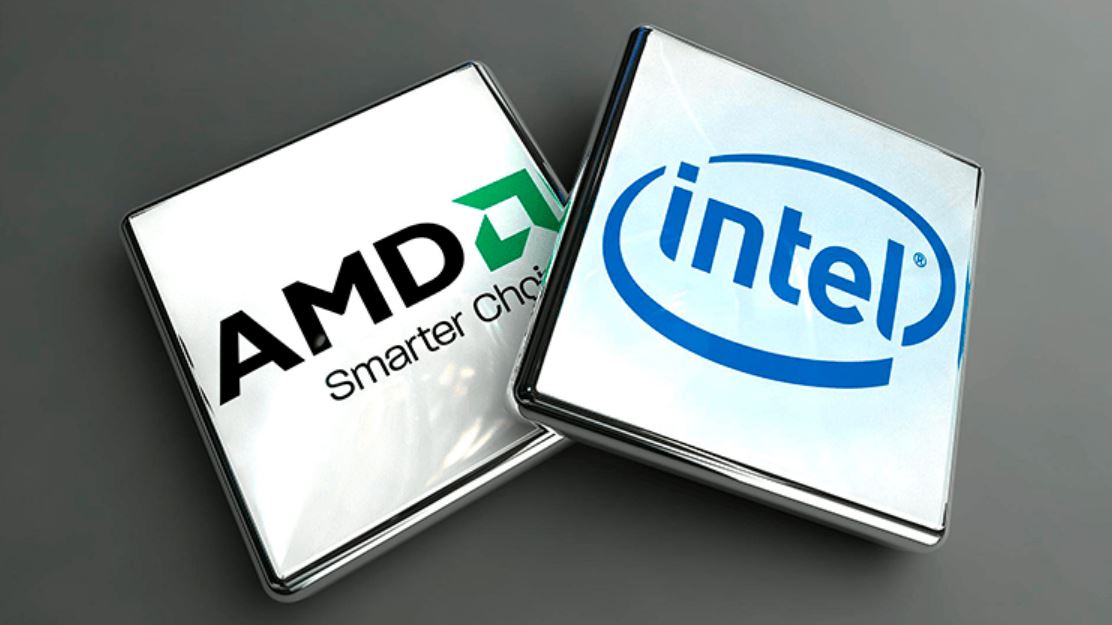
Despite a turbulent news cycle and mounting external pressures, Intel has managed to maintain its dominant position in the x86 processor market during the second quarter of 2025. According to Mercury Research, both Intel and AMD saw relatively flat chip sales in Q2, with very little market share shifting hands between the two. The numbers highlight the stability of Intel’s position in the face of growing competition and internal challenges.
Holding Steady in Client and Server Markets
Intel’s share of the x86 processor market—excluding IoT and SoC segments—stood at 75.8% in Q2 2025, a marginal increase from 75.6% in Q1. AMD, by comparison, held 24.2%, down slightly from 24.4% the previous quarter. While this quarter-to-quarter movement is negligible, the year-on-year comparison shows AMD gaining modest ground. In Q2 2024, Intel held 78.7% while AMD had 21.3%. The shift, while noteworthy, doesn’t support claims of a dramatic upheaval in market dynamics.
Industry analyst Dean McCarron of Mercury Research summed it up concisely: “Outside of the IoT/SoC boom, it was a very normal second quarter for the conventional X86 market.” Traditional client and server CPU markets experienced standard seasonal growth, barely exceeding median growth rates, suggesting a stable market without any significant upsets.
IoT/SoC Surge Adds Momentum
One area of pronounced growth was in the IoT and System-on-Chip (SoC) markets. Both Intel and AMD saw robust shipment increases in this segment, contributing to a stronger-than-usual seasonal quarter for overall x86 processor unit shipments. The IoT/SoC category is becoming increasingly important as industries outside of traditional computing—such as automotive, industrial, and embedded systems—expand their demand for capable processing hardware.
However, Mercury’s data separates these numbers when calculating core market shares, offering a more grounded perspective on performance in the traditional client and server sectors. The data paints a picture of an industry evolving at the edges while remaining relatively stable at the center.
Server Market: Flat but Firm
The server CPU market was described as “uninteresting” by McCarron on a sequential basis, with both AMD and Intel experiencing little to no quarter-over-quarter growth. That said, the year-over-year figures were stronger, reflecting a rebound from a subdued 2024 that had been plagued by inventory adjustments and a cyclical downturn.
Intel maintained its total unit shipments in the server category by shifting focus toward non-data center products such as Xeon D chips used in networking and storage servers. While this strategy helped sustain volumes, it had a downside: lower average selling prices (ASPs), which in turn dragged down Data Center and AI (DCAI) revenues. McCarron noted that “those products have much lower ASPs, so lower revenues, which is why Intel’s DCAI revenues were lower when units were flat.”
AMD, on the other hand, hit a record high in server revenues, primarily due to a higher mix of its new Turin core CPUs. While unit shipments only grew modestly, the increased revenue per unit gave the company a meaningful financial boost. AMD’s server market share now stands at 37.2%, a 0.1-point increase from the previous quarter. Although a small move in market share terms, it represents a financial milestone for the company.
Leadership Drama and Political Heat
Adding intrigue to Intel’s otherwise steady performance was a political and leadership sideshow involving Intel CEO Lip-Bu Tan and former U.S. President Donald Trump. After publicly calling for Tan’s resignation, Trump reversed course following a meeting with the CEO, calling Tan a “success.” While the public clash created headlines, there’s no evidence it materially affected Intel’s business performance in the quarter.
This political drama is reflective of the scrutiny Intel continues to face as a bellwether for the U.S. semiconductor industry. With ongoing competition from AMD and growing threats from Arm-based processors, Intel remains under pressure to execute effectively across both innovation and leadership fronts.
Strength in Mobile, Mixed Signals in Desktop
In the client segment, Intel saw modest gains thanks in part to mobile CPU shipments, where the company’s product stack remains strong. AMD, however, gained ground in the desktop space, leveraging its performance and efficiency advantages in high-end consumer and gaming PCs.
The performance in client PCs mirrors the broader trend: slow but steady competition, with each player holding firm in its areas of strength. Intel still leads in volume, but AMD continues to carve out gains in specific segments.
Arm: A Quiet Challenger
Arm-based chips are continuing to build momentum, especially in the server space. Nvidia’s GB200 processors are ramping up, adding competitive pressure on both x86 incumbents. On the client side, Apple saw slight growth in Q2 shipments, though overall momentum was dampened by weakness in Chromebook sales, a category that has been losing steam industry-wide.
Conclusion
Intel’s performance in Q2 2025 is best described as steady amid storms both literal and figurative. With minimal market share change in core client and server markets, strong growth in IoT/SoC segments, and a continued ability to hold its ground against AMD, Intel demonstrated resilience. While AMD continues to gain share slowly, particularly in server revenue and desktop CPUs, the x86 market remains far from the upheaval some had forecasted.
Despite external political noise and shifting product mixes, the reality is that in this maturing market, change is incremental, not revolutionary. For now, Intel remains firmly in control, while AMD continues to make strategic progress and Arm looms as the third force to watch.

Featured Post

AWS re:Invent 2025: 10 Biggest Announcements
The AWS re:Invent 2025 conference was held on December 1–5, 2025 in Las Vegas, delivered a flurry of high-profile announcements, highlighting a major push toward “agentic […]

Sarmad Hasan
December 5, 2025

Supercomputing 2025 Elevates the AI-HPC Convergence with Performance-Driven Infrastructure
Supercomputing 2025, held in St. Louis, underscored how the high-performance computing (HPC) market is increasingly being shaped by artificial intelligence (AI) demands. From ultra-dense GPU servers […]
Sarmad Hasan
December 1, 2025

Microsoft Ignite 2025: Major Breakthroughs in AI, Agents and Data
At Microsoft Ignite 2025, the company made a bold push into “agentic AI” — unveiling a series of updates across Copilot, Windows, Azure and data platforms […]
Sarmad Hasan
November 28, 2025