


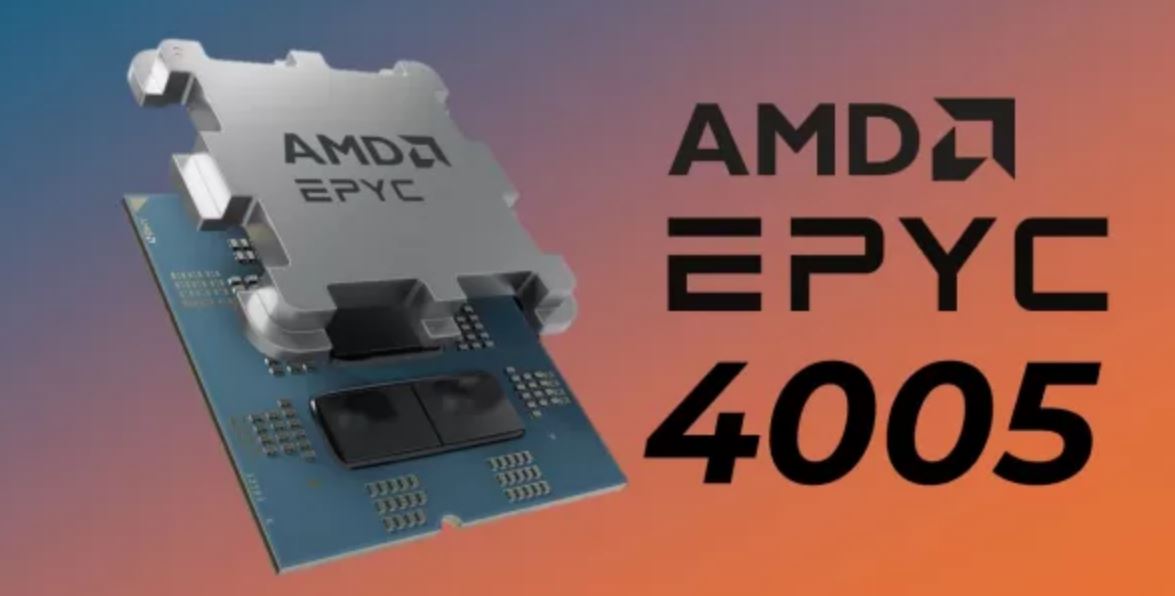
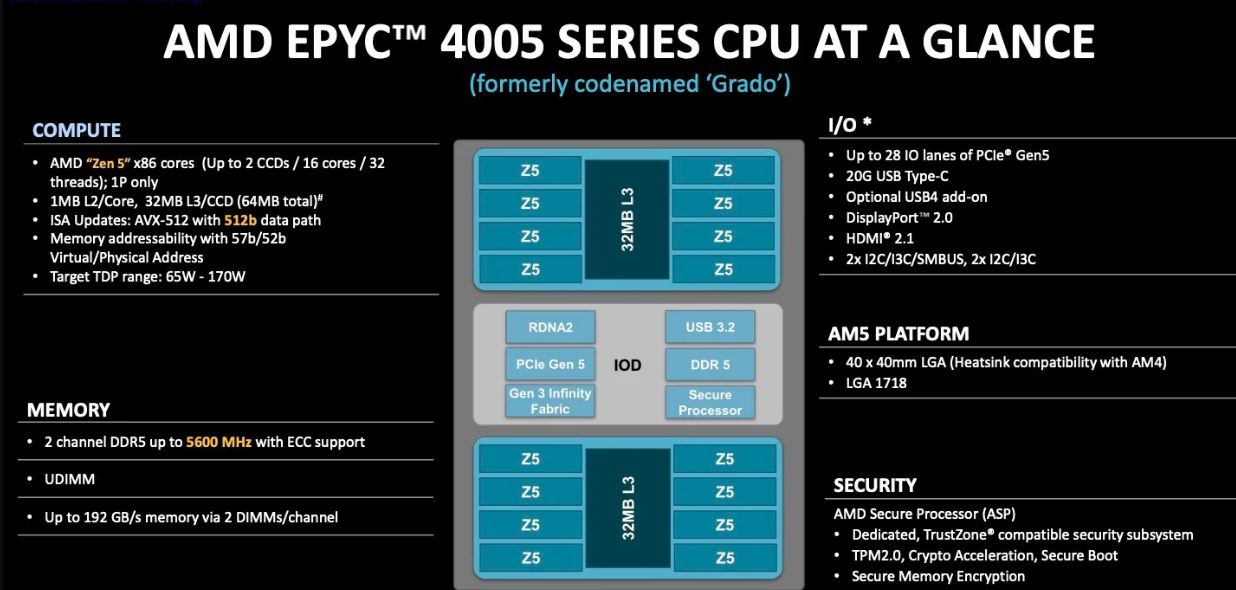
AMD launches EPYC 4005 Series processors, designed specifically for hosted IT service providers and small to medium enterprises. These new chips are built on the EPYC 4004 series and are based on AMD’s Zen 5 architecture, utilizing the cost-effective and familiar AM5 socket.
AMD Launches EPYC 4005 Series: Key Details
According to AMD, the EPYC 4005 series is engineered to offer strong performance, efficiency and security at an affordable price point, catering to modern infrastructure needs such as virtualized environments, enterprise applications and cloud-hosted services.
A key feature of the EPYC 4005 series is its single-socket platform architecture, designed with a “scale out” strategy in mind.This makes it ideal for small and medium-sized businesses (SMBs) aiming to expand infrastructure in a cost-effective way. The AM5 socket simplifies server design and reduces bill of materials (BoM) costs, providing a significant advantage for enterprise deployments.
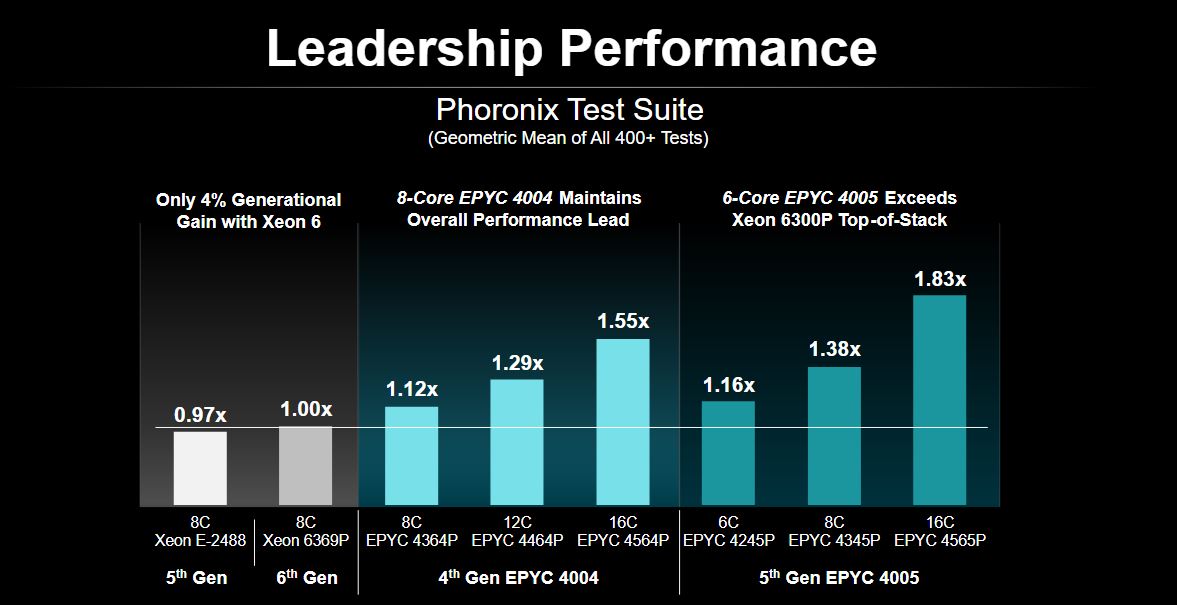
AMD launches EPYC 4005 Series to dominate the market. Benchmark tests using the Phoronix suite revealed that the 16-core EPYC 4565P outperforms Intel’s top-tier 6th-gen Xeon 6300P processor by 1.83 times, showcasing the efficiency of AMD’s architectural choices. AMD launches EPYC 4005 Series to give tough time to ARM-based Ampere Altra processors, commonly adopted in hyperscale cloud environments.
Despite not being primarily designed for artificial intelligence, the new EPYC chips are capable of handling lighter artificial intelligence and machine learning workloads. This opens the door for enterprises looking to integrate AI-driven processes without investing in high-end graphic processing units or specialized accelerators.
Early adopters like Mumbai-based Ishan Technologies have embraced the EPYC 4005 processors for their Tier-3 data center operations. Pinkesh Kotecha, chairman and managing director of Ishan Technologies, cited high core density, power efficiency and security as key reasons for selecting AMD.
He emphasized that the company’s cloud platform, Ishan Cloud will leverage these processors to support customers in banking, financial services and insurance, Information Technology Enabled Services, manufacturing and government sectors especially in meeting India’s stringent data localization laws and digital transformation goals.
Analysts have also highlighted the value proposition of the EPYC 4005 series. Manish Rawat from TechInsights called it an attractive option for cloud hosting and web services, thanks to its favorable price-to-performance ratio. CMR’s Prabhu Ram noted the strong mix of performance-per-watt and modern input and output support, which makes the series a viable alternative to Intel’s Xeon E-2400 and 6300P, particularly for edge computing deployments.
ARM-based processors like Ampere Altra offer advantages in power efficiency, AMD’s Zen 5 architecture provides a balanced approach by combining competitive performance with lower thermal design power (TDP) and broader software compatibility. AMD launches EPYC 4005 Series to cement its relationship with major industry partners such as Altos, ASRock Rack, Gigabyte, Lenovo, MiTAC, MSI, Newegg, Supermicro and Vultr, marking strong market readiness and adoption potential for AMD’s latest data center solution.

Featured Post

HPE Discover 2026: The 10 Biggest Product Announcements
Key Takeaways HPE expanded its AI Factory portfolio with new NVIDIA-powered infrastructure...


Microsoft Build 2026: Everything You Need To Know
Microsoft Build 2026 marked a pivotal moment in the company’s transformation from...




Cisco Live 2026: Agentic AI, Unified Operations and Quantum-Safe Security
At Cisco Live 2026, Cisco unveiled one of the most ambitious platform...
Follow us on:


Get the Latest News & Deals
Sign up to receive the latest news, updates and special offers from HostNOC.
I'd like to receive: