


Technology budgets are becoming harder to manage as businesses face rising software costs, evolving cybersecurity threats, growing data volumes and increasing pressure to adopt artificial intelligence. An IT budget that prioritizes outdated infrastructure or unnecessary software subscriptions can leave an organization vulnerable, inefficient and less competitive. At the same time, cutting essential technology investments to reduce short-term costs can create expensive problems down the road.
The solution is not simply to spend more money on IT; it is to invest strategically. With artificial intelligence adoption accelerating, cloud environments expanding and cyber risks becoming more complex, IT leaders must identify which investments will deliver measurable business value in 2027. A well-planned IT budget should balance innovation, security, operational efficiency, and long-term resilience.
In this article, you will learn about how to create an IT budget in 2027.
IT Budget 2027: 7 Things You Should Spend Money On In 2027
Here are seven things you should allocate funds for in your IT budget 2027.
1. Artificial Intelligence and Intelligent Automation
Artificial intelligence should be a major consideration in the 2027 IT budget, particularly for businesses seeking to improve productivity, automate repetitive tasks and make faster, data-driven decisions. Investments in generative AI, AI-powered analytics, intelligent virtual assistants and AI agents can help organizations streamline customer support, software development, document processing and business operations.
Gartner forecast worldwide AI spending to reach $2.7 trillion in 2026, representing 49.5% year-over-year growth, highlighting the scale of investment in AI infrastructure, software and services. However, organizations should prioritize practical use cases over experimental deployments, budgeting for AI integration, employee training, data governance, model security and ongoing usage costs. The goal should be measurable improvements in productivity, service quality and revenue rather than adopting AI simply to follow a trend.
2. Cybersecurity and Data Protection
Cybersecurity deserves a protected place in every IT budget because a single successful attack can disrupt operations, expose sensitive information, damage customer trust and create significant financial losses. In 2027, organizations should invest in endpoint detection and response (EDR), extended detection and response (XDR), multifactor authentication (MFA), identity and access management (IAM), email security, vulnerability management, encryption and security awareness training.
According to IBM Cost of a Data Breach Report, the average global cost of a data breach is $4.44 million, demonstrating why prevention and rapid incident response are business priorities rather than optional technical expenses. Companies should also fund regular penetration testing, security information and event management (SIEM), incident response planning and immutable backups to improve resilience against ransomware and other cyberattacks. A risk-based security budget helps protect critical assets while directing spending toward the threats most relevant to the organization.
3. Cloud Infrastructure and IT Modernization
Cloud infrastructure and IT modernization should remain central to IT budget planning as organizations seek greater scalability, flexibility and operational efficiency. Funding should cover cloud computing platforms, infrastructure as a service (IaaS), platform as a service (PaaS), application modernization, hybrid cloud management and migration from unsupported legacy systems. Businesses can also benefit from cloud cost optimization practices such as rightsizing virtual machines, eliminating idle resources, monitoring storage consumption and implementing FinOps processes to improve financial accountability.
Moving every workload to the cloud is not automatically the most economical option; some applications may be better suited to on-premises infrastructure or a hybrid environment. IT leaders should evaluate total cost of ownership, performance, compliance requirements, vendor dependency and workload criticality before committing funds. The objective is to build a reliable, secure, and scalable technology environment without allowing cloud consumption and subscription fees to grow unchecked.
4. Data Management, Analytics and Business Intelligence
Reliable data is essential for effective AI, business intelligence, forecasting, and strategic decision-making, making data management a valuable IT budget investment for 2027. Organizations should allocate funds to data integration, data warehouses or lakehouses, data quality tools, master data management, business intelligence platforms and analytics solutions that turn operational information into actionable insights. Investments in platforms such as Microsoft Power BI, Tableau and cloud-based analytics services can help teams monitor key performance indicators, identify customer behavior patterns, improve supply chain planning, and measure financial performance.
Analytics tools are only as useful as the data behind them, so budgets must also support data governance, access controls, metadata management, privacy compliance and data lifecycle policies. By improving data accuracy and accessibility, businesses can reduce reporting inefficiencies, establish a stronger foundation for AI initiatives and make more informed decisions across departments.
5. Backup, Disaster Recovery and Business Continuity
Business continuity and disaster recovery (BCDR) should be essential components of the 2027 IT budget because system outages, ransomware incidents, accidental data deletion and infrastructure failures can interrupt critical business operations. Organizations should invest in automated backups, geographically separate recovery environments, immutable storage, disaster recovery as a service (DRaaS), redundant network connections and documented incident response procedures. They should also establish recovery time objectives (RTOs) and recovery point objectives (RPOs) to determine how quickly systems must be restored and how much data loss is acceptable.
Regular recovery drills are equally important because purchasing backup software does not guarantee that data can be restored successfully. A resilient disaster recovery strategy reduces downtime, safeguards business-critical information and helps organizations maintain customer service during unexpected disruptions. Rather than treating resilience as an emergency expense, IT leaders should make it a planned and measurable investment.
6. Employee Training, IT Skills and Technical Support
Technology investments deliver limited value when employees lack the skills to use them effectively, making workforce development an important priority for the 2027 IT budget. Businesses should allocate funding for AI literacy, cybersecurity awareness, cloud certifications, data analytics training, software development skills and professional development for IT administrators and security teams.
As organizations introduce automation and AI-powered workflows, employees need guidance on responsible AI use, data privacy, prompt engineering and the verification of AI-generated outputs. IT departments may also need additional funding for technical support, managed service providers, specialist consultants and knowledge management systems to address skills gaps and improve service delivery.
Microsoft’s Work Trend Index found that 82% of surveyed leaders considered the year a pivotal moment to rethink strategy and operations, reinforcing the importance of adapting organizational capabilities to changing technology. Investing in people helps improve adoption, reduce operational mistakes and maximize the return on software and infrastructure spending.
7. IT Asset Management, Software Optimization and FinOps
IT asset management and software optimization help organizations control technology costs without compromising performance or security. In 2027, IT leaders should budget for software asset management (SAM), hardware lifecycle management, SaaS management platforms, cloud cost monitoring, license compliance and FinOps practices that connect technology consumption with financial accountability. These investments help identify unused subscriptions, duplicate applications, underutilized cloud resources, unnecessary hardware purchases and contracts that no longer deliver sufficient value.
Organizations should also maintain accurate inventories of endpoints, servers, applications, and cloud services to improve procurement planning and reduce security risks associated with unsupported devices. Gartner has highlighted that rising infrastructure costs, AI initiatives and competing priorities are placing pressure on IT budgets, making disciplined cost management increasingly important. By regularly reviewing vendor agreements, consolidating overlapping tools and tracking spending against business outcomes, companies can redirect savings toward higher-value investments such as cybersecurity, modernization and AI adoption.
Conclusion
Planning an effective IT budget for 2027 requires a balanced approach that supports innovation while protecting business operations and controlling costs. Organizations should prioritize artificial intelligence and automation, cybersecurity and data protection, cloud infrastructure and modernization, data analytics, disaster recovery, employee training and IT asset management.
These seven investment areas help businesses strengthen security, improve productivity, modernize technology and build long-term operational resilience. Expert forecasts from Gartner and research from IBM and Microsoft highlight the growing importance of AI capabilities, security and workforce readiness but every organization should tailor its spending to its own objectives, risk profile, and available resources.
Ultimately, the best IT budget is not necessarily the largest one; it is the budget that connects every significant technology investment to measurable business value, sustainable growth and a stronger competitive position. How would you creatIT budget 2027? Share it with us in the comments section below.

Featured Post
7 Key Takeaways from Uptime Institute’s Global Data Center Survey
The rapid growth of artificial intelligence, cloud computing and digital services is...

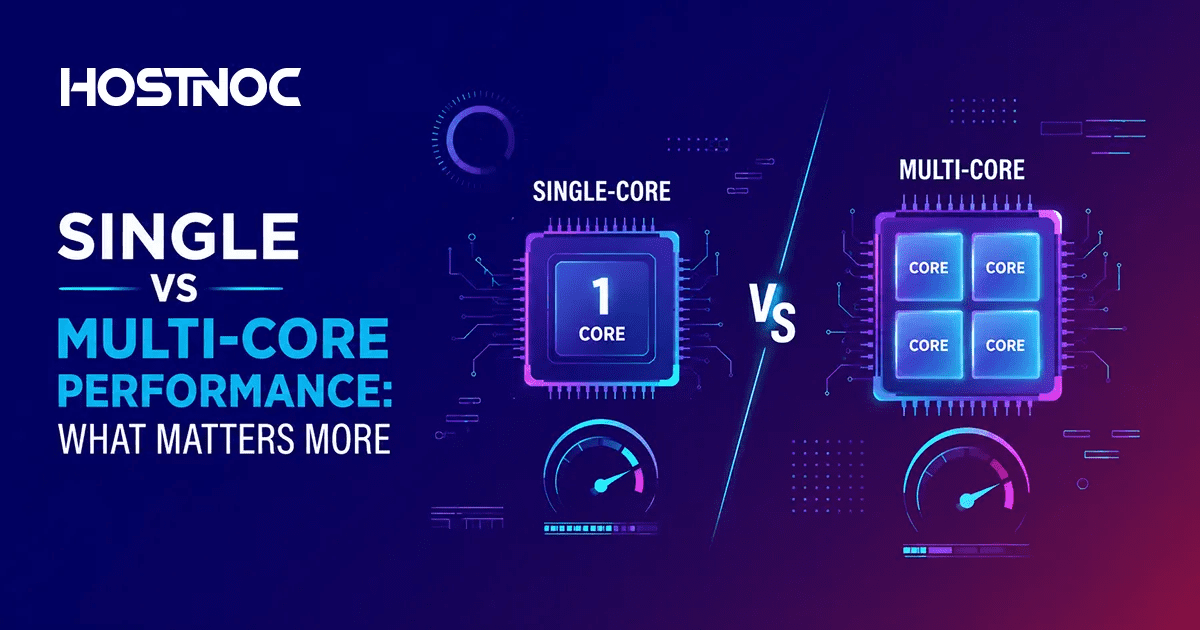
Single vs Multi-Core Performance: Epic Showdown
Key Takeaways Single-core performance determines how fast a processor handles one task...


Computex 2026: Top Product Announcements
At Computex 2026 in Taipei, the technology industry highlighted a major shift...
Follow us on:


Get the Latest News & Deals
Sign up to receive the latest news, updates and special offers from HostNOC.
I'd like to receive: