


Information technology is entering a period in which simply maintaining systems is no longer enough. Organizations are expected to modernize infrastructure, deploy artificial intelligence, strengthen cybersecurity, control technology costs and deliver better digital experiences all while dealing with increasingly complex regulatory and operational requirements.
The problem is that many IT departments are still operating with fragmented applications, aging infrastructure, disconnected data, manual processes and security architectures designed for a very different threat landscape. Meanwhile, technologies such as generative AI, autonomous agents, edge computing, confidential computing and zero-trust security are moving rapidly from experimentation into mainstream enterprise environments.
The pressure will become even greater in 2027. Businesses that treat IT as a support function rather than a strategic capability risk falling behind competitors that use technology to automate operations, personalize customer experiences, accelerate product development and make faster decisions.
The solution is not to chase every emerging technology. It is to establish a focused technology agenda around the capabilities that will have the greatest impact on business resilience, productivity, security, and growth. Here are the seven IT priorities organizations should place at the center of their 2027 technology strategy.
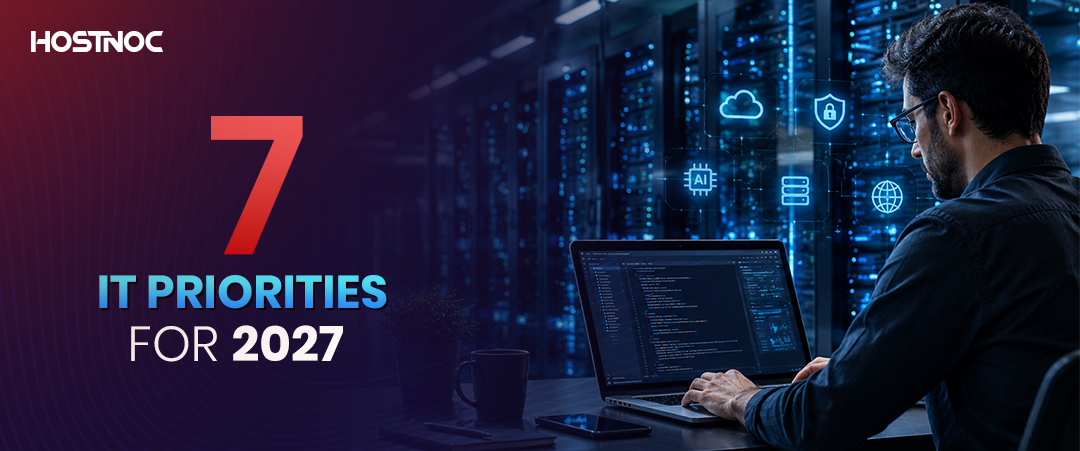
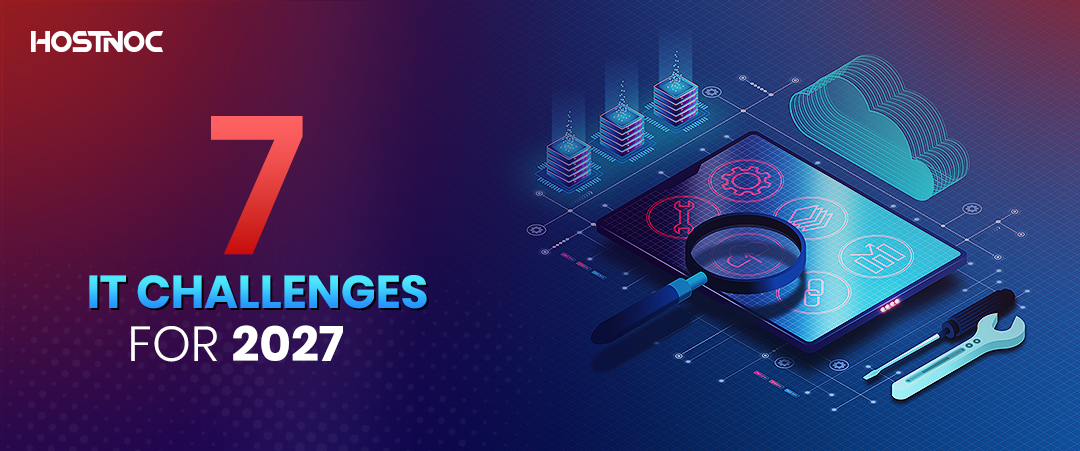
7 IT Priorities for 2027
Here are seven IT priorities for 2027.
1. Make AI-Native Operations a Core IT Capability
Artificial intelligence will move beyond isolated pilots and become embedded across the IT operating model. In 2027, organizations should treat AI as an operational capability rather than a standalone innovation project. This means integrating generative AI, machine learning, AI agents, automation and predictive analytics into service management, software development, cybersecurity, infrastructure monitoring and business workflows.
Platforms such as Microsoft Azure, Amazon Web Services, Google Cloud, NVIDIA AI, IBM Watson, and OpenAI are contributing to an ecosystem in which enterprises can build AI-powered applications and intelligent workflows at increasingly large scale. The important shift for CIOs will be deciding where AI should act autonomously, where human approval is required, and how AI-generated decisions can be audited.
IT service management is one immediate opportunity. AI copilots can summarize incidents, correlate logs, suggest remediation steps, generate documentation and help employees resolve routine technical problems. AI agents can potentially execute multi-step workflows such as provisioning resources, investigating alerts, or escalating incidents based on predefined policies.
However, organizations should avoid measuring artificial intelligence success simply by the number of deployed copilots. The stronger metric is business and operational impact: reduced mean time to resolution, fewer repetitive tickets, faster software releases, lower infrastructure costs, improved developer productivity and better service availability.
By 2027, leading IT organizations will therefore need an AI governance layer covering model selection, data access, identity, observability, security, human oversight, cost management and regulatory compliance.
2. Build a Zero-Trust, AI-Resilient Cybersecurity Architecture
Cybersecurity will remain one of the highest-priority IT investments in 2027 because the attack surface continues to expand. Cloud workloads, APIs, SaaS platforms, remote endpoints, operational technology, mobile devices, third-party integrations and AI systems all create additional pathways that attackers can exploit.
The traditional security model, trusting users and devices because they are inside a corporate network is increasingly inadequate. Organizations should continue adopting zero-trust principles based on the assumption that no user, device, workload or application should receive implicit trust.
Frameworks and technologies associated with zero trust include identity-aware access controls, multifactor authentication, privileged access management, endpoint detection and response, network segmentation, security information and event management and continuous risk assessment. Vendors such as Microsoft, Palo Alto Networks, CrowdStrike, Cisco, Fortinet, Okta and Cloudflare are major participants in this security ecosystem.
AI introduces another dimension. Enterprises will need to protect AI models, prompts, training data, retrieval systems, APIs and autonomous agents against threats such as prompt injection, data leakage, model manipulation, unauthorized tool use and compromised credentials.
At the same time, organizations should prepare for post-quantum cryptography. Although large-scale quantum attacks are not an everyday enterprise threat, cryptographic migration can take years because certificates, applications, devices, embedded systems and legacy infrastructure must all be assessed.
The 2027 security strategy should therefore combine zero trust, identity security, AI security, data protection, threat intelligence, automated detection and post-quantum readiness into one integrated architecture.
3. Modernize Cloud Infrastructure Without Losing Cost Control
Cloud adoption will remain central to IT strategy but the 2027 conversation will be less about simply “moving to the cloud” and more about building an efficient, resilient, and economically sustainable cloud environment.
Many enterprises now operate across multiple environments: Amazon Web Services, Microsoft Azure, Google Cloud, private clouds, colocation facilities and on-premises infrastructure. This hybrid and multicloud reality can provide flexibility but it can also produce duplicated services, inconsistent security policies, unpredictable consumption costs and operational complexity.
IT leaders should therefore prioritize cloud modernization and FinOps together. FinOps brings financial accountability into cloud operations by connecting engineering decisions with business costs. Instead of treating cloud expenditure as an unavoidable infrastructure bill, organizations can identify which workloads generate value and which resources are unnecessarily expensive.
In 2027, modernization should focus on technologies such as containers, Kubernetes, serverless computing, infrastructure as code, platform engineering, automated resource optimization, and observability. Organizations should also evaluate where workloads actually belong. Not every application needs to run in a public cloud, and not every workload benefits from Kubernetes.
The objective should be a workload-optimized infrastructure strategy that considers performance, latency, security, compliance, availability, data sovereignty and total cost of ownership. Cloud strategy will increasingly become an architectural discipline rather than a migration program.
4. Convert Data Into a Governed, Real-Time Enterprise Asset
Artificial intelligence is only as effective as the data behind it. Consequently, data architecture will become an even more important IT priority in 2027. Enterprises frequently have valuable information distributed across enterprise resource planning systems, customer relationship management platforms, data warehouses, data lakes, SaaS applications, operational databases, documents, emails, internet of things devices and departmental applications. If that information is inaccurate, inaccessible, duplicated, or poorly governed, artificial intelligence initiatives will struggle to deliver reliable results.
Organizations should prioritize modern data architectures built around data quality, metadata management, lineage, interoperability, real-time analytics, and strong governance. Technologies such as Snowflake, Databricks, Microsoft Fabric, Google BigQuery, Amazon Redshift, and Apache Kafka illustrate the broader ecosystem supporting modern enterprise data platforms.
The rise of AI also makes data governance an AI governance issue. Organizations need to know which data a model can access, whether sensitive information is being exposed, where data originated, and how long it should be retained. Real-time data will become particularly important for operational decision-making. Instead of relying exclusively on periodic reports, businesses can use streaming data from applications, transactions, sensors, websites and connected devices to identify anomalies and respond faster. The goal for 2027 should be to create a trusted data foundation in which employees, applications, analytics systems, and AI agents can access appropriate information securely and with sufficient context.
5. Prioritize Resilience, Disaster Recovery and Business Continuity
Availability will become a strategic differentiator as organizations become increasingly dependent on digital systems. A cloud outage, ransomware attack, software failure, supply-chain disruption or critical database incident can quickly become a business crisis.
For 2027, IT leaders should move beyond conventional disaster recovery checklists and develop measurable digital resilience. This includes defining recovery time objectives and recovery point objectives for critical applications, testing backups, implementing geographically distributed infrastructure and regularly conducting recovery exercises.
Backup strategies also need greater attention. Immutable backups, offline recovery copies, privileged-access controls and automated backup validation can reduce the risk of attackers compromising.
-
Modernize the Digital Employee Experience
Employee technology will become an increasingly important IT performance indicator. Slow devices, excessive software as a service applications, fragmented collaboration tools, unreliable virtual private networks, poor identity experiences and complicated internal systems directly affect productivity. The 2027 priority should be to create a frictionless digital workplace. This includes modern endpoint management, unified identity, single sign-on, automated provisioning, self-service IT support, collaboration platforms, digital experience monitoring and AI-powered service desks.
Organizations should measure more than ticket volume. Useful metrics include mean time to resolution, application performance, device health, employee friction points, self-service resolution rates and time lost to recurring technical problems. AI assistants can help employees troubleshoot issues, locate internal information, summarize documentation and complete routine service requests but these systems should be grounded in approved enterprise knowledge.
The workplace is also becoming increasingly heterogeneous. Employees may work across laptops, smartphones, virtual desktops, browser applications, collaboration suites, specialized business software and AI tools. IT should therefore manage the entire employee technology journey, from onboarding and device provisioning to application access, support and security.
7. IT Resilience, Business Continuity and Sustainable Infrastructure
By 2027, resilience will extend far beyond traditional disaster recovery. Organizations face ransomware, cloud outages, supply-chain disruptions, geopolitical uncertainty, infrastructure failures, extreme weather events and third-party service interruptions. IT must be designed to continue operating when individual components fail.
A resilient architecture should include tested backups, immutable storage, disaster recovery procedures, redundant infrastructure, geographically distributed services, incident-response playbooks and clearly defined recovery time objectives (RTOs) and recovery point objectives (RPOs).
Organizations should regularly test whether they can actually restore critical systems rather than assuming that backups are sufficient. Tabletop exercises, recovery simulations, failover testing and ransomware recovery drills can expose weaknesses before a real incident occurs.
Sustainability should also become part of infrastructure planning. AI workloads and high-performance computing can significantly increase electricity and cooling requirements. IT leaders should consider energy-efficient data centers, workload optimization, efficient processors, renewable energy sourcing, hardware lifecycle management and responsible equipment disposal.
The objective is to create infrastructure that is secure, available, recoverable, efficient and economically sustainable. Resilience should be measured by the organization’s ability to maintain critical business functions, not simply by the uptime percentage of individual systems.
Conclusion
The seven IT priorities for 2027 share one underlying principle: technology investment must produce measurable business value while reducing organizational risk. Artificial intelligence will change how we work, cloud platforms will remain critical and data will power all the smart applications and automation will change the IT operations landscape but none of these technologies can deliver the desired results without robust governance, security and architectural resilience. Organizations that prioritize these areas systematically will be better positioned to control costs, protect critical information, improve productivity, modernize their technology estates and compete effectively in an increasingly digital economy.
Share your list of IT priorities for 2027 in the comments section below.

Featured Post
15 n8n Workflow Examples to Automate Your Business
Real n8n workflow examples for marketing, sales, support, AI and DevOps, with...

n8n Workflows for Businesses: A Comprehensive Guide
A complete guide to n8n workflows for businesses: how they work, core...
7 IT Challenges for 2027
Technology is moving faster than most organizations can adapt. Artificial intelligence, cloud...

Follow us on:


Get the Latest News & Deals
Sign up to receive the latest news, updates and special offers from HostNOC.
I'd like to receive: